

Quick Summary
Eco friendly footwear is judged by three things: what the shoe is made from, how it was made, and what happens when it wears out. Renewable materials like organic cotton, hemp, cork, and natural rubber, plus recycled content such as recycled PET, all offer distinct benefits and trade-offs. Durability often matters most, because a shoe that lasts longer needs fewer replacements.
- Check the full material chain, since a recycled upper on a heavy-adhesive petroleum sole can still have a large footprint.
- Durability multiplies every other gain, so a longer-lasting pair often beats a shorter-lived green pair.
- Biodegradable soles only break down under industrial composting, not in landfills.
- Look for stated material percentages and verifiable certifications like GRS or GOTS.
- Repair, reuse, and take-back programs usually beat recycling or landfill at end of life.
Table of Contents
- What Makes Footwear Eco Friendly in the First Place
- Natural and Renewable Materials in Sustainable Shoes
- Vegan Leather Shoes: Plant-Based and Synthetic Options Compared
- Recycled Materials in Footwear: Plastic Bottles, Upcycled Leather, and Scrap
- Comparing the Environmental Impact of Common Footwear Materials
- How to Choose Sustainable Shoes and Spot Greenwashing
- Caring for Eco Materials and Planning Their End of Life
- Frequently Asked Questions
What Makes Footwear Eco Friendly in the First Place
Sustainable footwear is made with materials and processes that reduce environmental harm across the product's life, from sourcing to disposal, and that is what makes eco friendly footwear worth understanding.
Most people assume "eco" means a single material, usually recycled plastic. In practice, a shoe's footprint depends on the whole chain: a recycled-content upper stitched to a petroleum-based sole with heavy adhesives may still carry a large footprint.
When you evaluate footwear, look for three things: renewable or recycled inputs, low-impact manufacturing, and a realistic end-of-life path. Organic cotton, natural rubber, and cork are renewable materials. Recycled PET and reclaimed leather can keep waste out of landfills. Each choice carries trade-offs, which the sections below work through.
Natural and Renewable Materials in Sustainable Shoes
Natural materials regenerate on human timescales, the core advantage over petroleum-based synthetics. Their drawbacks are real: they can require water, land, and processing that vary widely by farm and factory.
Organic Cotton, Hemp, and Cork
Organic cotton is grown without synthetic pesticides or fertilizers, reducing soil and water contamination, and it is breathable and comfortable in canvas uppers and linings.
Hemp fiber is strong, durable, and typically needs less water and fewer pesticides than conventional cotton.
Cork footbeds and soles are lightweight, naturally antimicrobial, and odor-resistant. It is less flexible than rubber, so it works best in sandals and clogs or as an insole layer.
Pros and cons at a glance:
| Material | Pros | Cons |
|---|---|---|
| Organic cotton | Breathable, soft, widely available | Water-intensive, weak in wet conditions |
| Hemp fiber | Durable, low-input growing | Limited footwear options, pricier |
| Cork | Renewable harvest, odor-resistant | Less flexible, can crack under heavy flexing |
Natural Rubber Soles
Natural rubber comes from the latex of rubber trees and provides grip, cushioning, and flex. It is biodegradable under the right conditions, though a sole in a landfill breaks down very slowly. Most natural rubber soles also contain synthetic compounds or fillers, so check the label for the actual blend.
The main trade-off is the tapping and processing supply chain.
Vegan Leather Shoes: Plant-Based and Synthetic Options Compared
Vegan leather is a broad label covering plant-based materials such as pineapple leaf fiber, cactus leather, and mushroom-based mycelium, as well as polyurethane (PU) and PVC synthetics.
Plant-based options generally have lower fossil-fuel inputs but vary in durability.
PU and PVC are plastics. They avoid animal products and often cost less than real leather, but they do not biodegrade and can release microplastics.
Real leather from a tannery that treats its wastewater and uses chrome-free or vegetable tanning is a separate conversation.
Recycled Materials in Footwear: Plastic Bottles, Upcycled Leather, and Scrap
Recycled materials keep existing waste in use. The best-known example is recycled polyester (rPET), made from post-consumer plastic bottles and spun into yarn for uppers and laces.
Upcycled leather uses offcuts and production scraps from leather goods manufacturing.
Recycled content is not automatically better. Check whether the percentage is stated and whether it is certified, such as through the Global Recycled Standard, which verifies recycled input across the supply chain.
Comparing the Environmental Impact of Common Footwear Materials
Most guides compare materials by listing adjectives, "renewable," "recycled," "biodegradable", without explaining what drives the footprint. A more useful comparison breaks each material down by the same five mechanisms: feedstock energy, water and land use, chemical processing, durability, and end-of-life outcome.
The Five Mechanisms That Drive a Shoe's Footprint
1. Feedstock energy. Virgin petroleum-based materials carry the energy embedded in extracting and refining fossil fuels.
**2.
3. Chemical processing. Chrome tanning, solvent-based adhesives, and conventional dyeing are the chemical hot spots in footwear. Chrome-free and vegetable tanning, water-based adhesives, and solution-dyed fibers reduce the chemical burden.
**4. A shoe's total footprint is roughly its production footprint divided by the number of wears you get, so a pair that lasts twice as long with a moderately higher-impact material frequently beats a short-lived "green" pair. Check how durable clothing is before buying to estimate wear life first.
5. End-of-life outcome. A single-material shoe that can be mechanically recycled or composted has a very different end-of-life profile than a multi-material shoe glued together with adhesives that cannot be separated.
How the Common Materials Stack Up
| Material | Feedstock energy | Water/land | Chemical load | Typical wear life | End-of-life |
|---|---|---|---|---|---|
| Virgin EVA / PU / PVC | High (fossil) | Low | Moderate to high | Moderate | Poor (landfill, microplastics) |
| Conventional cotton | Moderate | High water | Moderate (pesticides, dyes) | Low to moderate | Compostable if untreated |
| Organic cotton | Moderate | High water | Low (no synthetic pesticides) | Low to moderate | Compostable if untreated |
| Hemp canvas | Low | Low | Low | High | Compostable if untreated |
| Cork | Low | Low | Low | Moderate (footbed) | Biodegradable |
| Natural rubber | Moderate | Low | Moderate (processing) | High | Slow biodegradation |
| Recycled polyester (rPET) | Low virgin demand | Low | Moderate | Moderate | Recyclable in theory, rarely in practice |
| Upcycled / scrap foam | Low virgin demand | Low | Low to moderate | Moderate | Limited |
| Chrome-free leather | Moderate | High (cattle) | Lower than chrome | High (repairable) | Limited |
Why "Biodegradable" Is Not Automatically Better
A material labeled biodegradable only breaks down under specific conditions, usually industrial composting with controlled heat, moisture, and oxygen. A shoe sole buried in a landfill is typically compacted and starved of oxygen, so even natural rubber and plant-based foams can persist for a very long time. Biodegradability is a real advantage only when there is a realistic pathway to those conditions, such as a brand take-back program that routes soles to industrial composting; without that pathway, the claim is largely theoretical.
Reading a Lifecycle Claim Without Being Misled
When you see a carbon or water figure on a product page, check three things: the functional unit (per pair? per kilogram of material?), the system boundary (cradle-to-gate, or cradle-to-grave?), and whether the figure is third-party verified. A cradle-to-gate number that stops at the factory gate excludes the use phase and disposal, which can be the largest part of the total. A verified cradle-to-grave figure is far more meaningful, and far rarer. If a brand publishes a number without those three details, treat it as marketing rather than measurement.
EPA guidance on lifecycle assessment and sustainable materials management
How to Choose Sustainable Shoes and Spot Greenwashing
Start by reading the material breakdown, not the marketing. Vague phrases such as "eco-conscious," "planet-friendly," or "made with nature in mind" tell you nothing measurable. Learn how to identify ethically sourced products to judge a claim before you buy.
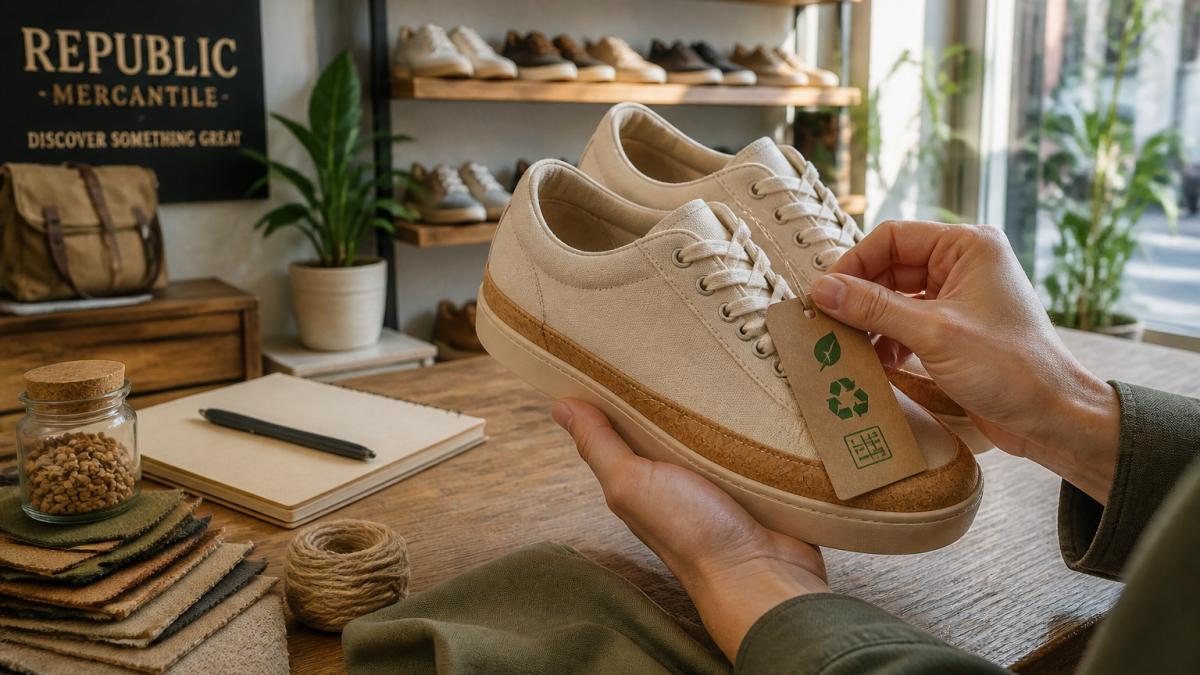
Watch for these red flags:
- Percentages are missing. "Made with recycled materials" could mean 3% recycled content on a lining.
- Certifications are named but unverifiable. Look for a certificate number or a link to the certifying body's registry.
- The product is positioned as green while the company's overall practices are not disclosed. Supply chain transparency should cover factories, not just the shoe.
Useful certifications include the Global Recycled Standard (GRS) and the Global Organic Textile Standard (GOTS) for organic fibers. Certifications do not guarantee perfection, but they give you something to check.
When you shop, a simple checklist helps:
- Material breakdown listed with percentages
- At least one recognized certification with a verifiable reference
- Clear care and repair information
Caring for Eco Materials and Planning Their End of Life
Most sustainable-footwear guides stop at production. The harder and more useful question is what happens after you buy the shoe: how to keep it alive longer, and what to do with it when it finally wears out. This section covers both, material by material, because eco materials often need different care than conventional ones, and because end-of-life is where most sustainability claims quietly fall apart.
Material-Specific Care That Actually Extends Wear Life
Organic cotton and hemp canvas. These fibers shrink and fade in hot water.
Cork. Cork footbeds absorb water and swell, then can crack as they dry.
Natural rubber soles. Rubber degrades with prolonged UV exposure and heat. Store shoes out of direct sunlight and away from radiators.
Plant-based and PU vegan leathers. Many plant-based leathers use a polymer binder that can crack under heat or repeated flexing. Condition with products formulated for the specific finish, keep them away from direct heat, and store stuffed to hold shape. Find non-toxic cleaning products for families that are gentle on these finishes.
Chrome-free and vegetable-tanned leather. These need conditioning more often than chrome-tanned leather because the tanning process leaves them more receptive to moisture loss.
The End-of-Life Decision Tree
When a shoe reaches the end of its wearable life, work through these options in order, the earlier options almost always beat the later ones on total impact:
- Repair. Resoling, restitching, and patching extend wear life and are usually the lowest-impact option.
- Reuse. Donate or resell pairs that still have wear in them. Reuse displaces a new purchase, which is a real environmental gain.
- Brand take-back programs. Some brands accept worn footwear and route it to recycling or reuse. Ask whether the program actually recycles the material or simply downcycles it, and whether it accepts multi-material shoes.
- Municipal or specialty recycling. Textile and shoe recycling drop-off points exist in many areas, but acceptance varies. Check locally before assuming a curbside program takes shoes.
- Landfill. The last resort, and the fate of most footwear today.
Why Design for Disassembly Matters
A shoe made from a single material, an all-rubber sandal, a one-piece knit upper, is far easier to recycle than one built from a dozen materials glued together. Adhesives are the enemy of circularity: they bond dissimilar materials so tightly that separation becomes uneconomical. When you shop, favor designs with stitched construction, removable insoles, and fewer material types, the difference between a shoe that can re-enter a material stream and one that cannot.
A Practical Longevity Routine
- Rotate pairs so each has time to dry and decompress between wears.
- Clean and dry properly after wet or muddy use, trapped moisture is a leading cause of premature breakdown.
- Address sole wear early with a resole before the midsole is compromised.
The most sustainable shoe is almost always the one you already own and keep in good repair. Care and end-of-life planning are not afterthoughts to the materials story, they are the part you actually control.
EPA guidance on reducing waste and recycling basics
Frequently Asked Questions
What materials are used in eco-friendly shoes?
Eco-friendly shoes commonly use organic cotton, hemp, cork, natural rubber, recycled PET from plastic bottles, upcycled leather, and plant-based or bio-based foams. Each material trades off differently on durability, breathability, and footprint, so the best choice depends on how you plan to wear the shoe. Check the product listing for the specific materials used in each part of the shoe, since uppers, linings, and soles are often made from different materials.
Is vegan leather more eco-friendly than real leather?
It depends on what the vegan leather is made from. Many common vegan leathers are polyurethane or PVC on a fabric base, which are plastic-based and do not biodegrade easily. Plant-based versions made from materials like cactus, mushroom, or pineapple leaf fiber can have a lower footprint, but they vary in durability and sometimes rely on coatings. Real leather has a high carbon and water footprint from tanning and livestock. Neither option is automatically better, so look for specifics on the material composition and any lifecycle data the brand publishes.
Are recycled materials better for shoes?
Recycled materials such as recycled PET from plastic bottles and upcycled leather scraps divert waste from landfills and reduce the need for virgin material, which can cut energy use in production. However, recycled content does not guarantee the shoe will last longer or be recyclable at the end of its life. A shoe made of mixed materials glued together is hard to recycle regardless of its recycled content, so check how the shoe is constructed as well as what it is made of.
How can I tell if a shoe material is sustainable?
Look for specific claims rather than vague words like eco or green. Named certifications, stated recycled percentages, and a disclosed supplier or factory are stronger signals than general marketing language. Be cautious of claims that describe one component as sustainable while the rest of the shoe is not, and of terms that are not backed by a standard. Ask the brand for its material composition and any third-party verification if the listing does not provide it.
