

Table of Contents
- The Real Cost of a Chaotic Home (And Why Cheap Fixes Work)
- Benefits of Decluttering for Mental Health
- Cheap Home Organization Hacks That Actually Stick
- How to Find the Best Online Home Goods Retailers
- Why Affordable Home Organization Is a Long-Term Investment
- Psychological Barriers to Decluttering (And How to Break Them)
- Maintenance Routines for a Clutter-Free Home That Lasts
- Eco-Friendly and Budget-Friendly Organization Choices
- Frequently Asked Questions
Last Updated: September 30, 2026
The Real Cost of a Chaotic Home (And Why Cheap Fixes Work)
A disorganized home costs money, calm, and space you're already paying rent on. That's why affordable home organization matters: you don't need a custom closet system, just a few low-cost changes that remove friction from your routine.
U.S. Census Bureau data on household spending shows that housing is the single largest line item in most family budgets. Every square foot you can't use is money already spent. Affordable home organization is really about recovering that value, not about buying more stuff.
Below, we'll show you how to organize a home on a real budget, and why the cheapest fixes often outlast the expensive ones.
Benefits of Decluttering for Mental Health
The mental health payoff from decluttering is real and fast: a tidy room reduces the decisions your brain makes every time you walk in.
Decluttering is the process of removing items you don't use, need, or love from a defined space so the items that remain have a clear home. That definition matters because it separates organizing from shopping. You can declutter a whole room without spending a dollar.
How Visual Noise Raises Cognitive Load
Visual noise is the accumulated visual information from objects, piles, and mismatched surfaces in a room. Every unmade decision about where something belongs stays open in your head.
Cognitive load is the mental effort your working memory handles at once. When a counter is covered in mail, keys, and half-finished projects, each item competes for attention and you feel tired before doing anything.
Your brain treats every visible object as an open loop.
The 3-3-3 Rule and Other Quick Wins for Stress Reduction
The 3-3-3 rule: pick up three items to throw away, three to donate, and three to put back. It takes under five minutes and works on any surface.
Other quick wins that cost nothing:
- Clear one horizontal surface completely, then keep it clear
- Put a single basket by the door for keys, mail, and bags
- Move anything you haven't touched in a year into a temporary box and date it
The Sleep Connection Most Guides Skip
Bedroom clutter has an outsized effect because it's the last thing your brain processes before sleep and the first on waking. Laundry on a chair, papers on a nightstand, or a closet you can't close all signal "unfinished business."
Why the Cheapest Fix Often Beats the Expensive One
Expensive organizing systems raise the stakes. A custom closet creates pressure to keep it perfect, and perfection is fragile. A $3 basket for the mail doesn't, when it fills up, you empty it without guilt.
Cheap Home Organization Hacks That Actually Stick
Affordable home organization works when it matches how you already live. The hacks that stick take under a minute to maintain.
Repurposing Household Items and Affordable Storage
You already own half the storage you need. Shoe boxes, mason jars, and old coffee tins work as drawer dividers and small-item bins. Repurposing beats buying nine times out of ten.
How to Find the Best Online Home Goods Retailers
The best online home goods retailers list exact dimensions, ship quickly, and let you return items without a fight. Everything else is marketing.
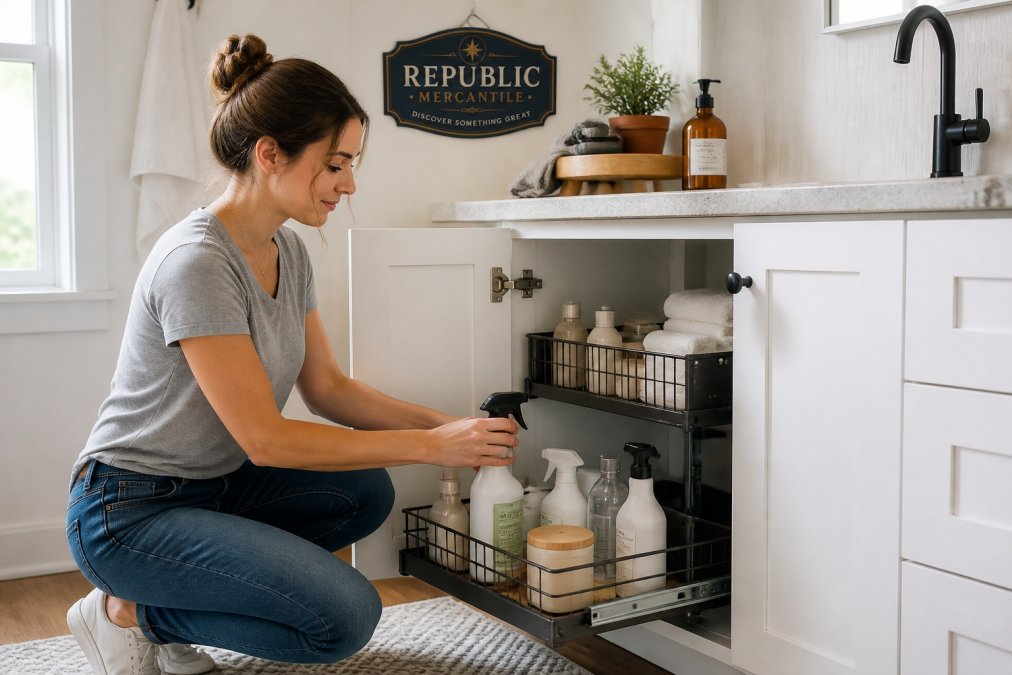
2 Pack Under Sink Organizer with Drawer →
The Cost-Per-Use Test
Before buying any organizing product, divide the price by the number of times you expect to use it. A $13 storage box protecting a hat collection for a decade costs less than replacing one crushed hat. A $27 under-sink organizer used twice a day for three years works out to pennies per use. A $6 bin that cracks in four months and gets replaced twice a year costs more.
A Practical Checklist for Evaluating Any Retailer Before You Buy
- Are product dimensions listed in the description, not just the photos?
- Is the shipping timeline stated in days, not vague promises?
- Is the return policy clear about who pays return shipping?
- Does the store restock inventory, or is every item a one-time find?
- Are prices shown with no surprise fees at checkout?
- Does the listing state a weight limit or material, so you can judge durability?
- Can you find the same item elsewhere to compare, or is it exclusive?
That last point matters for budget shoppers: a low sticker price with padded shipping isn't a deal, and neither is a "sale" price on a permanently marked-down item.
The Restocking Question Nobody Asks
If you're buying a single item for a single problem, a one-time-find retailer is fine. If you'll need it again, a second bin for a second closet, a replacement organizer, restocking matters more than price.
When to Buy Cheap and When to Buy Durable
Not every organizing purchase deserves the durable option. A rough rule:
- Buy cheap for items that touch nothing fragile, drawer dividers, open bins, label holders, baskets for low-value items.
- Buy durable for anything that protects something you'd hate to replace, hat boxes, under-bed storage, anything holding seasonal or sentimental items.
- Buy nothing when you already own a jar, box, or tin that does the job. This is the most underused option.
Why Affordable Home Organization Is a Long-Term Investment
Cheap organization pays back over years, not weeks. A $13 storage box that protects a hat collection for a decade costs less than replacing one crushed hat. That math holds across the house.
Psychological Barriers to Decluttering (And How to Break Them)
Most people don't struggle with decluttering because they're lazy, their brain is protecting them from a loss.
The three barriers that stop people cold:
- Sunk cost. "I paid for this, so I can't get rid of it." The money is already gone whether the item stays or goes.
- Someday thinking. "I might need this later." If you haven't needed it in a year, "later" is unlikely to arrive.
- Guilt. Gifts, inherited items, and things tied to memories feel disloyal to discard.
Maintenance Routines for a Clutter-Free Home That Lasts
A clutter-free home stays that way through small daily routines, not marathon sessions. Fifteen minutes a day beats four hours on Saturday.
| Routine | Time Needed | Frequency | What It Prevents |
|---|---|---|---|
| Reset the entryway | 2 minutes | Daily | Pile-up of mail, keys, and bags |
| Clear kitchen counters | 5 minutes | Daily | Visual noise at the start of every meal |
| 3-3-3 rule on one surface | 5 minutes | Daily | Slow accumulation in drawers and closets |
| Wipe down and restock one cabinet | 10 minutes | Weekly | Overflow and duplicate purchases |
| Seasonal swap and donate | 30 minutes | Quarterly | Storage of items nobody uses |
Eco-Friendly and Budget-Friendly Organization Choices
Zero-waste organization and cheap organization are often the same thing: reusing what you own is both.
Frequently Asked Questions
What is the 3-3-3 rule for decluttering?
The 3-3-3 rule is a quick way to start: find three items to throw away, three to donate, and three to return to their proper place. It works because it lowers the decision cost. You are not trying to finish the whole room, just making a small, clear choice. Do one round in a drawer or on a counter, and you have already cut visual noise and started stress reduction. It pairs well with a five-minute daily reset.
How does home organization impact mental health?
An orderly home lowers cognitive load. When surfaces are clear, your brain spends less energy filtering out visual noise, which supports focus and productivity. The benefits of decluttering for mental health include fewer daily decisions, less anxiety about misplaced items, and a stronger sense of control. A tidy entryway or kitchen counter also makes it easier to keep daily routines going, which supports mood over time.
Can you organize a home on a tight budget?
Yes. Start with what you already own. Repurposing household items like shoeboxes, jars, and baskets costs nothing. For small spaces, a two-tier under-sink organizer at $26.95 can double cabinet storage, and a stackable hat storage box at $12.99 protects up to 20 hats while using vertical space. Budget-friendly storage works when you measure the space first and buy only what fits. Cheap home organization hacks succeed because they solve a specific problem, not because you bought a lot.
What should I remove first when decluttering?
Start with obvious trash and broken items, then duplicates. The 12-12-12 rule helps: find 12 items to throw away, 12 to donate, and 12 to put back. Removing trash first gives you visible progress in minutes, which makes the next decision easier. If you feel stuck, set a timer for five minutes and only handle one surface, like a bathroom counter or a nightstand. Small wins build the habit.