

Table of Contents
- Why Buying Jewelry Online Requires Extra Care
- How to Verify Jewelry Authenticity Before You Buy
- What to Look for in Diamond Certification
- Evaluating Product Photography and Descriptions
- Online Jewelry Return Policy Best Practices
- Secure Payment Methods and Digital Security Hygiene
- Post-Purchase Verification, Appraisal, and Insurance Logistics
- Conclusion: Shopping Smart and Safe
- Frequently Asked Questions
Last Updated: September 15, 2026
Why Buying Jewelry Online Requires Extra Care
Buying jewelry online safely comes down to one principle: verify before you pay, then verify again after it arrives.
The core tension is simple. A photograph can make a $25 ring look like a $250 one, and a polished storefront can hide a seller with no return address. The FTC's online shopping guidance is blunt about this: if a seller won't disclose a physical address or a refund policy in writing, walk away. Most buyers skip that step because the product page looks professional. That is precisely when problems start.
Treat every online jewelry purchase as two transactions: the sale, which the seller controls, and verification, which you control.
| Stage | What You Check | When | Red Flag If Missed |
|---|---|---|---|
| Seller reputation | Reviews, address, contact info | Before browsing | No physical address listed |
| Metal and gem claims | Hallmarks, karat stamps, certification | Before purchase | "Gold-tone" with no karat mark |
| Photography | Macro shots, scale reference, video | Before purchase | Only one heavily edited photo |
| Return policy | Written terms, window, who pays shipping | Before purchase | "Final sale" buried in fine print |
| Payment method | Secure checkout, card protections | At checkout | Wire transfer or gift cards only |
| Post-purchase check | Independent appraisal | Within return window | Skipping it entirely |
| Insurance | Rider or standalone policy | Within 30 days | Assuming homeowner's covers it |
How to Verify Jewelry Authenticity Before You Buy
Verifying jewelry authenticity means confirming three things independently: metal content, gemstone identity, and the seller's willingness to document both. A seller who resists any of the three is telling you something.
Start with the metal. Precious metals sold in the United States are governed by the FTC Jewelry Guides, which set specific rules for how terms like "gold," "silver," and "sterling" may be used in advertising. A seller who uses those words loosely is either careless or dishonest, and neither is a good sign.
Reading Hallmarks and Metal Stamps
A hallmark is a stamped mark indicating metal purity, and it is your first physical check. On sterling silver, look for ".925" or "sterling"; on karat gold, "10K," "14K," or "18K." Stamps sit inside the band or on the clasp.

A stamp alone proves nothing, counterfeiters stamp base metal with ".925" constantly. Use it as a starting point, not a conclusion.
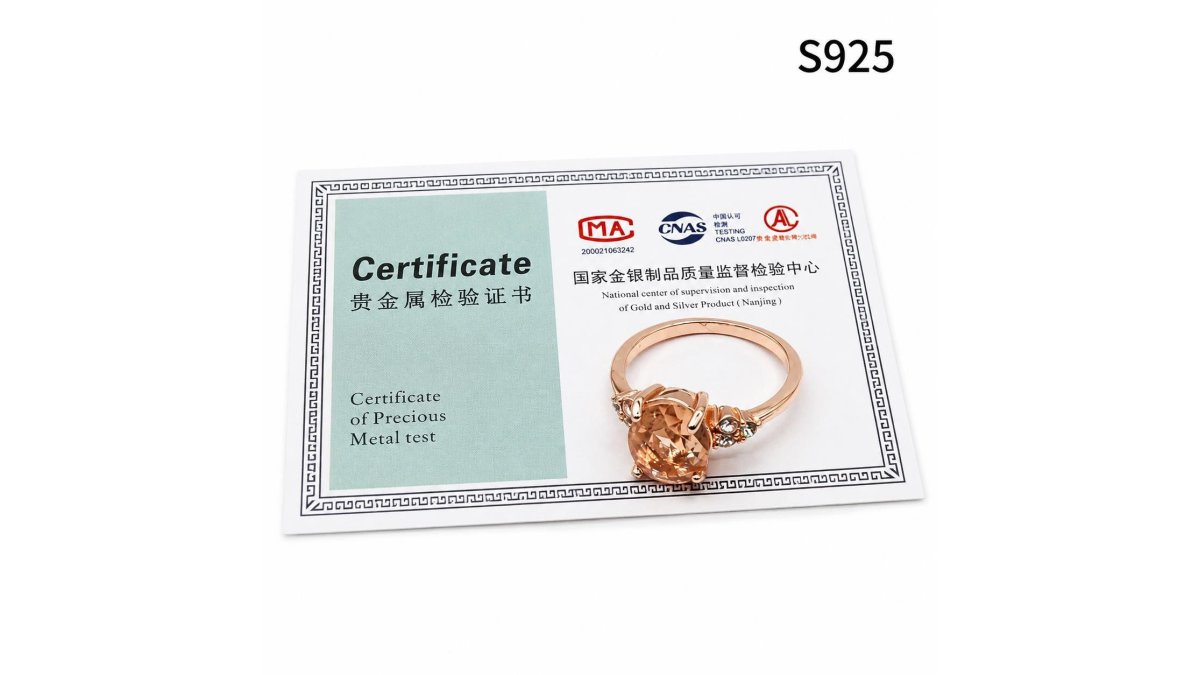
Photograph the hallmark before the return window closes. If an appraiser later disputes the metal content, you have a dated record of what the seller advertised.
Checking Gemstone Certification and Grading Reports
Gemstone certification is a document from an independent laboratory describing a stone's identity and characteristics. For colored stones, look for a recognized gemological laboratory; for diamonds, it matters even more.
Request the report number and verify it with the issuing laboratory's online lookup tool. A PDF the seller created is not a grading report; one you can independently confirm is.
What to Look for in Diamond Certification
What to look for in diamond certification is a report from an independent laboratory grading the stone on the Four Cs: cut, color, clarity, and carat weight, with a unique number you can look up yourself.
Diamond grading is only meaningful when performed by a neutral third party. A seller's in-house "certificate" is a marketing document. The Gemological Institute of America's report verification service lets you confirm any GIA report number directly, which takes about a minute and eliminates most of the risk.
Three things to check on the report itself:
- The report number matches the item. Compare it to the number the seller listed. Mismatches happen.
- The grading date is recent enough to be relevant. Old reports on a stone that has been reset or repolished may no longer describe it accurately.
- Clarity and color grades are stated, not implied. "Eye clean" is not a grade. "VS2" is.
For colored gemstones, the equivalent is a gemological report confirming the species and noting any treatments, a treated stone is worth less than an untreated one of the same appearance.
Evaluating Product Photography and Descriptions
Product photography is where the gap between expectation and reality gets widest: a well-lit macro shot can make a small stone look substantial and a pale one vivid.
Look for these signals of an honest listing:
- Multiple angles, including the back and the clasp, not just the flattering front view.
- A scale reference, such as a hand, a ruler, or a coin beside the piece.
- Unedited or lightly edited images. Heavy saturation is a warning sign.
- Explicit dimensions in millimeters, not just "small" or "delicate."
- A video, which is much harder to fake than a still.
Descriptions deserve the same scrutiny. "Gold-tone" is not gold. "Simulated diamond" is not a diamond. "Lab-created" is legitimate but should be stated plainly.
Online Jewelry Return Policy Best Practices
Online jewelry return policy best practices start with reading the policy before you buy, the terms you accept at checkout govern any dispute. Four clauses to read:
- The return window. Count the days from delivery, not from order date. Some sellers use order date, which quietly shortens your window.
- Who pays return shipping. On a heavy or high-value item, this can be significant.
- Condition requirements. Many policies void returns on sized, engraved, or worn pieces.
- Restocking fees. These are legal in most cases if disclosed, but they change the math on a marginal purchase.
If a ring arrives in the wrong size, some sellers cover resizing and some don't, confirm which before you buy.
Keep every piece of documentation: order confirmation, listing screenshots, certification, and packaging. That paper trail is your case in a dispute.
Secure Payment Methods and Digital Security Hygiene
Secure payment methods protect you twice: through the payment network's dispute process and through the data you don't expose.
Pay by credit card where possible. Card networks give you a formal dispute mechanism, the chargeback, that wire transfers, gift cards, and most peer-to-peer apps do not. Debit cards offer dispute rights, but the money leaves your account immediately.
A secure payment gateway should show a padlock in the browser bar and an address beginning with https://. That indicates an encrypted connection; it does not guarantee the seller is honest, but its absence is disqualifying.
Using Virtual Card Numbers for High-Value Purchases
A virtual card number is a temporary, merchant-locked number from your bank that maps back to your real account.
Escrow and Third-Party Payment Protection
Protecting Your Accounts and Payment Data
If a Purchase Goes Wrong
Post-Purchase Verification, Appraisal, and Insurance Logistics
Getting an Independent Appraisal
Insuring Your Jewelry Purchase
Documenting for a Future Claim
Conclusion: Shopping Smart and Safe
Frequently Asked Questions
Is it safe to buy jewelry online?
It can be safe if you take precautions. Buy from retailers with clear return policies, verified customer reviews, and secure checkout pages that use SSL encryption. Check for hallmarks on precious metals, request gemstone certification from independent laboratories, and use payment methods with fraud protection like credit cards or PayPal. Avoid deals that seem too good to be true, and always verify the seller's contact information before purchasing.
How do I verify the authenticity of online jewelry?
Start by checking for hallmarks like .925 for sterling silver or 14K/18K for gold. Request a gemological report from an independent laboratory for gemstones and diamonds. Look for an authenticity guarantee on the product page. Once the item arrives, inspect it with a jeweler's loupe, verify the weight and measurements match the description, and consider getting an independent appraisal for high-value pieces. If anything seems off, contact the retailer immediately.
What should I look for in diamond certification?
A legitimate diamond certification comes from an independent laboratory like GIA or AGS. Look for the 4 Cs: cut, color, clarity, and carat weight. The report should include a unique certificate number, a plotting diagram of inclusions, and precise measurements. Verify the certificate number on the laboratory's website to confirm it matches your stone. Avoid diamonds with certificates from unknown or in-house grading services, as these may not meet industry standards.
What are the best practices for returning jewelry bought online?
Before buying, read the return policy carefully. Check the return window, typically 14 to 30 days, and whether return shipping is covered. Keep all original packaging, certificates, and receipts. Take photos of the item when it arrives in case of disputes. Use trackable shipping with insurance when returning high-value items. Some retailers charge restocking fees or resizing fees, so factor those into your decision. If the policy is unclear, contact customer support before purchasing.
Buying jewelry online safely isn't about finding the cheapest listing. It's about finding a seller who documents what they sell and stands behind it. Republic Mercantile offers certified .925 sterling silver pieces, transparent product photography, and fast shipping with tracking on every order, so you can shop with confidence instead of hope. Browse the collection and find your next piece.