

Table of Contents
- Know Your Body Measurements Before You Shop
- How to Read Online Size Charts Like a Pro
- Research Brand-Specific Sizing and Fit
- Use Customer Reviews and Fit Feedback
- Check Fabric Composition and Stretch Factor
- Best Practices for Online Clothing Returns
- Build Your Personal Fit Kit and Measurement Reference
- Conclusion
Last Updated: August 29, 2026
Know Your Body Measurements Before You Shop
Getting accurate body measurements is the foundation of successful online shopping. Size labels mean almost nothing across different brands, one company's medium is another's small. What matters is how a garment's actual dimensions compare to your body.
Start with the essentials: bust, waist, hips, inseam, and shoulder width. These four measurements will handle 90% of your clothing purchases.
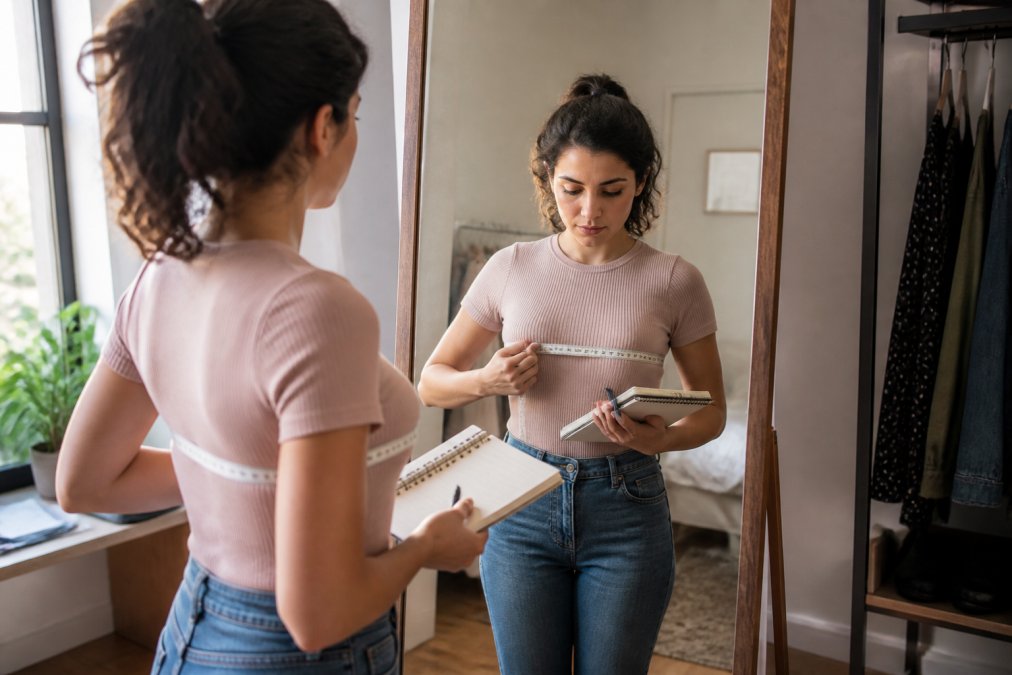
Use a soft measuring tape, not a ruler. Wear fitted clothing or nothing at all. Stand straight, relax your arms, and have someone help if possible. Measure at the fullest part of your bust, the narrowest part of your waist, and the fullest part of your hips. For inseam, measure from your inner thigh down to your ankle bone while wearing shoes you'll actually walk in.
Write these measurements down and keep them accessible, your phone notes, a spreadsheet, or a photo. This becomes your personal fit kit, the reference point you'll use for every purchase.
Here's what most shoppers miss: your measurements won't match the size chart exactly, and that's fine. A garment that's one inch larger in the bust than your measurement often fits better than one that's exact. Fabric has give, and your body moves.
How to Read Online Size Charts Like a Pro
Size charts aren't suggestions, they're the actual dimensions of the garment. You need to compare the garment's measurements to your body measurements, not match your size number to their size label.
Open the size chart and look for bust, waist, hip, length, sleeve length, and inseam. Some charts include shoulder width, which is valuable if you have broad or narrow shoulders. Compare each garment dimension directly to your measurements.
A garment should be slightly larger than your body in most places. For bust, aim for one to two inches of ease. For waist on pants, one inch is comfortable; two inches feels loose. For hips, two inches gives you room to move.
Size conversion across brands is tricky. A size 10 at one company might be a 12 at another. European sizes run smaller than American sizes. The only way through this is to stop thinking in terms of size numbers and start thinking in terms of inches and centimeters.
When you find a brand you like, bookmark their size chart. Order one item and note how it actually fits compared to the chart. Did the bust measurement match reality? Was the length accurate? That real-world data becomes your personal brand profile.
Research Brand-Specific Sizing and Fit
Every brand has its own fit personality. Some run large. Some run small. Some are generous in the chest but tight at the waist. Knowing this before you buy saves you from returns and disappointment.
Start with the brand's own size guide. Most legitimate retailers include detailed fit information and sometimes photos showing how the garment fits on models of different sizes. If a brand says "this style runs small, we recommend sizing up," listen to them.
Customer reviews are your next research tool. Skip reviews that just say "great fit" or "runs small." Look for reviews from people who describe their body type and what worked. Someone who says "I'm 5'8" with a 36" bust and usually wear a medium, but this runs large so I got a small" is giving you actionable information.
Check the return policy before you commit. Some retailers charge for return shipping. Some have strict 30-day windows. Republic Mercantile is dedicated to providing a seamless shopping experience by offering high-quality products at great prices, and understanding return policies is part of that confidence.
Look for fit discrepancies in product descriptions. If the description says "relaxed fit" but reviews say "tight through the shoulders," that's a red flag. Trust the aggregate of customer experience over a single professional photo.
Brand consistency matters, but it's not absolute. A brand might make fitted jeans and loose linen shirts. Each style has its own fit profile. Check the size chart for each category.

Use Customer Reviews and Fit Feedback
Customer reviews are your window into how a garment actually performs in real life. This is invaluable information, and it's free.
Look for specific fit feedback. "Runs small in the shoulders but generous in the waist" is gold. "I'm 5'4" and usually wear a petite, but this ran long so I sized down" tells you exactly what to expect. Find reviews from people with body types similar to yours.
Pay attention to fabric feedback too. Reviews mentioning shrinkage, transparency, or how the fabric feels after washing tell you about durability and care. If multiple reviewers mention that a cotton shirt shrinks significantly, you know to buy a size up or accept that it'll shrink.

Red flags in reviews: vague complaints without detail, reviews from people who clearly didn't read the product description, or reviews that seem to be about the wrong item. Also watch for reviews that contradict each other wildly, if half say "runs large" and half say "runs small," the brand probably doesn't have consistent sizing.
Product descriptions using vague language like "fits most body types" or "universally flattering" should make you skeptical. Honest descriptions acknowledge fit challenges: "This style has a fitted waist and generous hip, great for pear-shaped figures but potentially tight for apple shapes."
Red flags in product descriptions: photos showing the garment on only one body type, descriptions that don't mention fit at all, or language that's clearly marketing fluff. Good retailers know their garments' fit tendencies and communicate them clearly.
Check Fabric Composition and Stretch Factor
What a garment is made from determines how it'll fit, how it'll move, and how it'll age. A cotton shirt and a cotton-polyester blend look similar but behave completely differently.
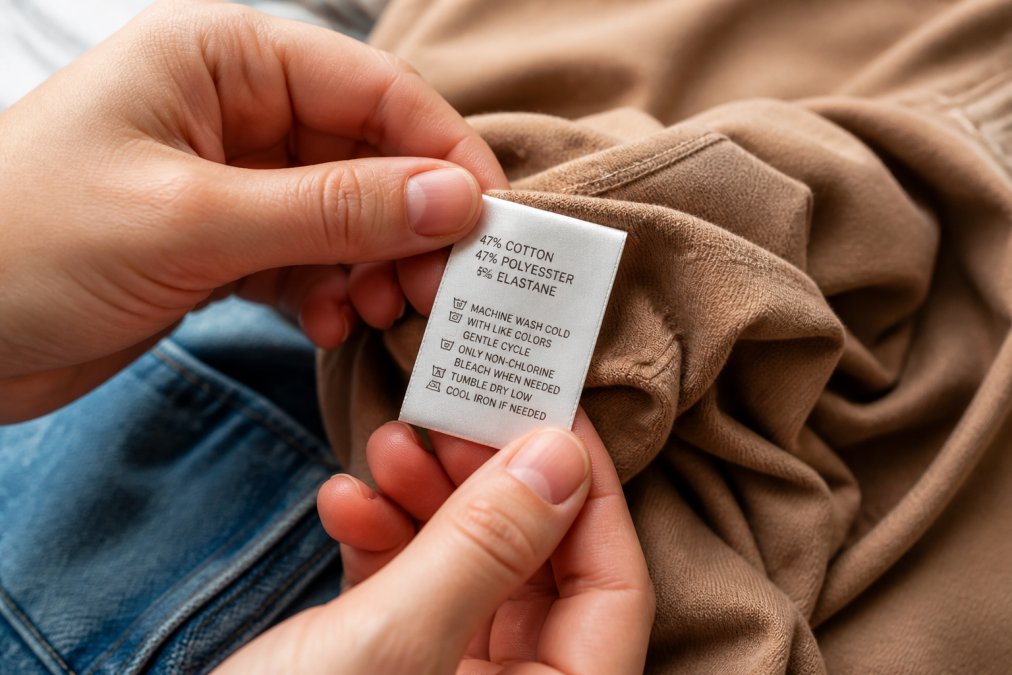
Pure cotton is breathable and soft but shrinks, wrinkles easily, and loses shape over time. Cotton blended with polyester resists wrinkles and holds shape better. Elastane (spandex) adds stretch, making garments more forgiving and comfortable, but it degrades over time with washing.
Stretch factor is crucial for fit. A stretchy fabric can accommodate a range of body sizes. A rigid fabric needs to fit precisely. Check the percentage. Anything above 3% elastane gives noticeable stretch. Below 1%, you're essentially buying rigid fabric.
Shrinkage varies by fiber content. Pure cotton can shrink 3-5%. Wool shrinks significantly if not treated. Synthetics don't shrink much. If you're buying a cotton garment, assume it might shrink and factor that into your sizing. Some retailers note if a fabric is pre-shrunk, which means it won't shrink further.
Drape and weight matter for how a garment looks on your body. A heavy cotton will drape differently than lightweight linen. The product description should mention weight and drape tendency. If it doesn't, look for photos showing the garment in motion or on different body types.
Care instructions tell you about fabric behavior. If a garment requires dry cleaning, that's a cost and hassle factor. If it needs to be hung dry, that limits your laundry routine. These details affect long-term fit and durability.
Best Practices for Online Clothing Returns
Before you buy anything online, understand the return policy. A good return policy means you can experiment with sizing and fit without financial risk.
Look for these specifics: How many days do you have to return? Thirty days is standard; some retailers offer 60 or 90. Can you return items that have been worn, or only unworn items with tags? Can you return final sale items? Do you pay for return shipping, or does the retailer cover it?
Shipping costs matter too. If you're ordering a $20 shirt and return shipping is $8, your effective cost is $28 even if you return it. Some retailers offer free return shipping on orders over a certain amount.
Check whether the retailer offers exchanges instead of refunds. An exchange means you can swap the item for a different size without paying return shipping twice.
Document everything. Take photos of the item when it arrives, including any damage or defects. Keep your order confirmation and tracking numbers. If you need to return something, having this documentation makes the process smoother.
Don't wait until day 29 to decide if something fits. Try it on, wear it around the house, move in it. If it doesn't work, initiate the return within the first week. This gives you time to reorder if needed and ensures you don't miss the return window.
Republic Mercantile is dedicated to providing a seamless shopping experience by offering high-quality products at great prices, and understanding return policies is part of that confidence.
Build Your Personal Fit Kit and Measurement Reference
Your personal fit kit is a living document. It starts with your body measurements but grows to include brand-specific fit notes, fabric preferences, and what actually works for you.
Create a simple spreadsheet or notes file with these columns: brand name, item type, size purchased, how it fit, fabric composition, and any notes about care or shrinkage. After you've bought three items from a brand, you'll see patterns.
Track what works for your body. If you have a larger bust and smaller waist, note which brands accommodate that shape. If you're tall, track inseam lengths across brands. Over time, you'll develop a personal brand profile that takes the guesswork out of shopping.
Keep photos of yourself in garments that fit well. When you're shopping and trying to decide if something will work, you can look back at how a similar garment looked on you.
Record fabric preferences. Maybe you hate how polyester feels, or you love how linen drapes. These preferences are part of your fit kit and help you eliminate options before you even check the size chart.
Test new brands carefully. When you try a brand for the first time, order one item in your usual size and see how it fits. If it works, great. If it doesn't, you've only lost one item to a return.
Revisit your measurements every few years or after significant weight changes. Bodies change, and your fit kit should stay accurate.
Buying clothes without trying them on requires strategy, but it's absolutely doable. The combination of accurate measurements, careful research, and understanding return policies removes most of the risk. Republic Mercantile's wide variety of everyday essentials and great prices mean you can shop with confidence, knowing you have the tools and the safety net to get it right. Start with your measurements, check the size charts, read the reviews, and don't hesitate to return items that don't work. That's smart shopping.
Frequently Asked Questions
How can I accurately measure myself for online clothing purchases?
Use a flexible measurement tape and measure over light clothing. Record bust (around fullest part), waist (natural waistline), hips (around fullest part), and inseam (inside leg from crotch to ankle). Measure twice to confirm accuracy. Write measurements down and compare them directly to the retailer's size chart before adding items to your shopping cart. Many sizing discrepancies come from incorrect body measurements, not poor sizing.
What should I look for in a brand's size chart to ensure a good fit?
Compare actual garment dimensions (bust width, length, sleeve length) rather than just size numbers. Check if the chart shows measurements in inches and includes inseam length for pants. Read customer reviews mentioning fit, look for comments about whether items run small, large, or true to size. Check the product description for fabric stretch and silhouette details, which affect how a garment drapes on your frame.
Why do clothing sizes vary so much between different brands?
Brands use different manufacturing standards, target different body types, and source from various suppliers, creating sizing discrepancies. A size 10 at one retailer may fit differently than a size 10 elsewhere due to variations in fabric composition, cut, and construction. This is why measuring your body and comparing those measurements to each brand's specific size chart is essential. Never assume your usual size will fit at a new retailer.
What are the best practices for reading customer reviews to gauge sizing?
Look for reviews mentioning fit feedback like 'runs small' or 'generous sizing.' Pay attention to reviewers who mention their own size and body type, as this helps you understand how the garment performs on similar frames. Check multiple reviews rather than relying on one opinion. Be cautious of reviews that only mention price or general quality without addressing fit. Return policies also matter, retailers with free returns reduce the risk of sizing mistakes.
This article was written using GrandRanker