

Table of Contents
- How to Choose Art for a Living Room
- Understanding Size and Scale for Different Walls
- How High to Hang Art in a Living Room
- How to Arrange Art Above a Sofa
- Living Room Gallery Wall Ideas
- Lighting and Displaying Fragile or Three-Dimensional Pieces
- Rental-Friendly and Damage-Free Display Options
- Coordinating Artwork with Room Colors and Decor
- Frequently Asked Questions
Last Updated: October 16, 2026
How to Choose Art for a Living Room
Styling unique art pieces in living rooms is about creating a space that feels like yours. The right piece anchors a room and tells a story about who you are. At Republic Mercantile, we help customers find unique art pieces that transform living spaces into personal galleries.
Start by thinking about what draws you in: bold colors or subtle tones, abstract shapes or realistic scenes. Your instinct matters more than any design rule, the best art is art you genuinely want to look at every day.
Match Your Personal Style and Interests
Your living room art should reflect what matters to you. If you're drawn to nature, consider landscapes, wildlife, or botanical themes. If you love history or culture, look for art that celebrates those interests. The connection you feel to a piece is what makes it work.
Think about your home's overall aesthetic too. Your art should feel at home with the rest of your decor, even if it stands out, a striking modern print can work beautifully in a traditional room if the colors complement your existing palette.
One common mistake is choosing art because it's trendy or because you think you should like it. Pick pieces that genuinely speak to you, and your living room will feel more authentic.
Select a Statement or Anchor Piece
Every strong living room display starts with one focal point: your anchor piece, the art that draws the eye first and sets the tone.
A statement piece works best where people naturally look when they enter the room: above the sofa or the wall directly across from the main seating. Your anchor piece should feel confident there, neither lost nor overwhelming.
Consider the scale of your anchor piece relative to your wall and furniture. Republic Mercantile carries several statement pieces, including the 12" x 16" Art Print on Canvas Picasso Oysters, which brings sophisticated artistic flair to any living room with its bold cubist composition.

Understanding Size and Scale for Different Walls
The size of your art matters as much as the art itself. A piece that's too small disappears; one that's too large overwhelms. Getting the scale right separates amateur arrangements from polished gallery displays.
For a large wall, a single oversized piece creates drama, or you can group several smaller pieces to fill the space.
For small walls or tight spaces, choose one medium-sized piece rather than cramming multiple items into a cramped area.
Think about the room's proportions too. High ceilings can handle larger, bolder pieces; lower ceilings work better with medium-sized art that doesn't feel imposing. The goal is harmony between your art and the architecture.
How High to Hang Art in a Living Room
Hanging art at the right height changes everything. Too high and it floats disconnected from your furniture. Too low and it feels crowded. The right height creates a visual connection between your art and the room.
Standard Hanging Measurements
The standard rule is to hang art so the center sits at eye level, approximately 57 to 60 inches from the floor, assuming you're standing at a normal viewing distance.
But eye level in a living room differs from a hallway. When you're seated on your sofa, your eye level drops, so if your art is above seating furniture, hang it slightly higher than the standard 60 inches to account for seated viewing.
Measure twice before you hang. Mark the center of your wall space where the middle of your artwork should go, then measure up to determine where the top and bottom of your frame should be. Use a level to ensure it hangs straight.
Adjusting for Furniture and Room Layout
The furniture below your art influences the ideal hanging height. Above a sofa, leave roughly 8 to 10 inches between the top of the sofa and the bottom of your art, enough visual separation without making the piece feel disconnected.
Above a console table or mantel, hang art slightly lower, around 4 to 6 inches above the furniture, for a tighter, more cohesive grouping. Above a bed, leave 8 to 10 inches between the headboard and the art.
Room traffic patterns matter too. If people walk past your art frequently, hang it high enough that nobody bumps their head. In a quiet corner, you have more flexibility. Think about how the room is actually used, not just how it looks in a photo.
How to Arrange Art Above a Sofa
The sofa is the most common anchor point for living room art. It's where people sit, where guests look, and where your eye naturally travels.
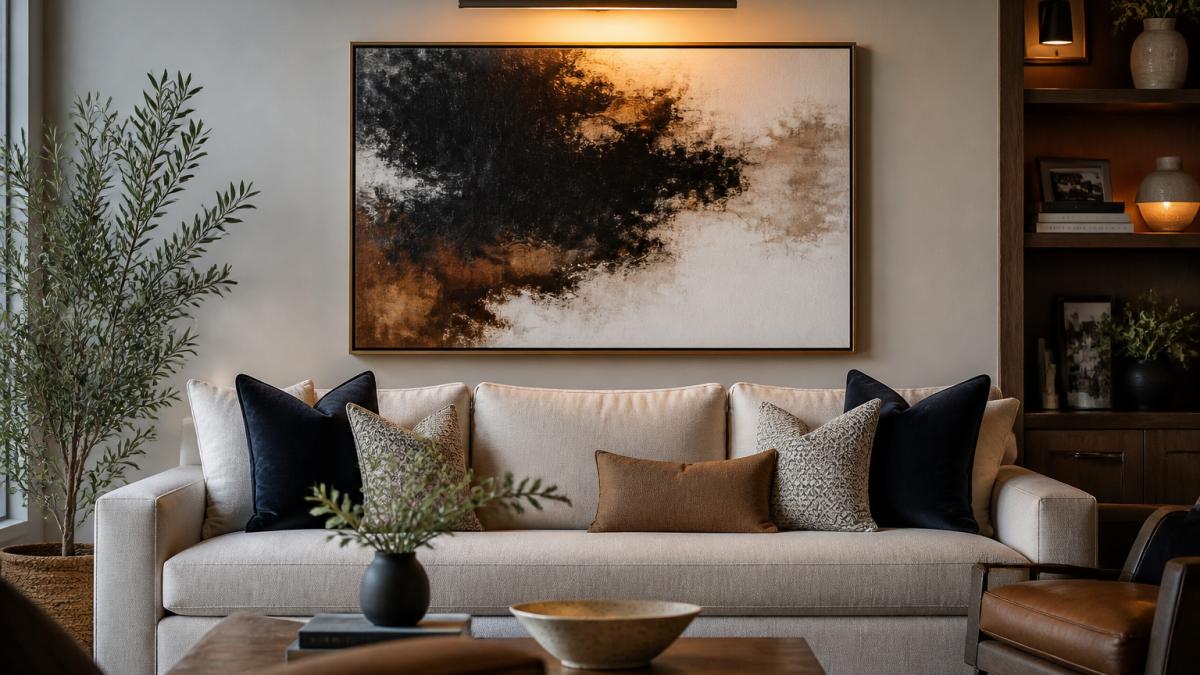
Start with your anchor piece. Hang it centered above the sofa at roughly 60 inches for standing eye level, adjusted slightly higher for seated viewing.
The space between the sofa back and the art matters.
If you're hanging a single large piece, center it directly above the sofa's midpoint. If you're grouping multiple pieces, treat them as one unit and center that group.
Don't hang art so close to the sofa that it's uncomfortable to sit beneath it. A piece that makes someone nervous about bumping or damaging it won't feel welcoming.
Living Room Gallery Wall Ideas
A gallery wall transforms a blank space into a curated display of personality. Unlike a single statement piece, it tells a more complex visual story, a conversation starter and a reflection of your interests.
Planning Your Layout and Spacing
Start by gathering all the pieces you want to include. Lay them on the floor in the arrangement you're considering.
Consistent spacing creates visual harmony. Most gallery walls use 2 to 3 inches between frames, so measure carefully, uneven gaps are visually jarring, even if they're only off by half an inch.
The overall shape of your gallery wall matters too. A rectangular grid feels formal and organized. A scattered, organic arrangement feels casual and creative. A vertical column feels tall and elegant.
Start from the center and work outward. Hang your largest or most important piece first, then build around it, this prevents you from running out of space or creating an unbalanced composition.
Mixing Styles and Frames for Visual Interest
You don't need matching frames for a cohesive gallery wall, mixing frame styles often looks more interesting than uniformity.
12" x 16" Art Print on Canvas Picasso Oysters →
Vary the size and shape of your pieces too. Mix square frames with rectangular ones. Include a circular piece if it fits your aesthetic. Different shapes create visual rhythm and prevent the wall from feeling monotonous.
The art inside the frames should have some visual connection. A shared color palette is one approach; a common theme, all nature, all typography, all abstract, is another.
Republic Mercantile's 3 pc Art 8x10 inch Luminous Garden Series - Morning Light works beautifully as part of a gallery wall arrangement. The three coordinated pieces create a cohesive botanical display while leaving room to add other items around them.

Lighting and Displaying Fragile or Three-Dimensional Pieces
Not all art is flat. Sculptural pieces, textiles, and delicate works require special consideration. The right lighting and display method protects your investment while showcasing it beautifully.
Choosing the Right Lighting
Lighting transforms how art looks, the same piece can feel warm and inviting under soft light or cold and harsh under bright overhead light.
Picture lights mounted above frames cast focused light on the artwork. They're subtle and professional-looking. Track lighting gives you flexibility to adjust the angle and intensity. Uplighting from below creates drama. Ambient room lighting provides general illumination.
Avoid placing art in direct sunlight if possible, UV rays fade colors and can damage delicate materials.
The color temperature of your lighting matters too. Warm light (2700K to 3000K) makes art feel cozy and inviting. Cool light (4000K and above) feels more clinical. Choose based on the mood you want and the colors in your art.
Protecting Delicate and Sculptural Artwork
Three-dimensional pieces, textiles, and fragile works need thoughtful display. Don't hang delicate pieces where they could be bumped or knocked down. Wall-mounted shelves work well for smaller sculptural pieces.
For hanging delicate pieces, use appropriate hardware. Heavy-duty picture hangers rated for the weight of your art prevent accidents. If you're hanging something particularly valuable or fragile, consult a professional framer about the best mounting method.
Textiles and tapestries should be hung using a rod system rather than nails. This distributes the weight evenly and prevents stress on the fabric; secure the rod firmly to wall studs for safety.
Keep fragile pieces away from high-traffic areas and away from children or pets who might knock them over. A piece that requires constant worry about damage won't bring you joy.
Rental-Friendly and Damage-Free Display Options
Not everyone owns their home. If you're renting or want to avoid wall damage, you still have plenty of options for displaying art beautifully.
Adhesive picture hangers hold surprising weight without damaging walls. They're removable and leave no marks when removed properly. Command strips and other damage-free hangers work well for lighter pieces.
Leaning art against a wall or on a shelf is a stylish alternative to hanging.
Freestanding easels hold art at an angle and add a gallery-like quality to your display. They work well for rotating art or for pieces you want to change seasonally.
Wall-mounted shelves let you display art without permanent installation.
If you're in a rental, talk to your landlord about what's allowed, many are fine with damage-free hanging methods.
Coordinating Artwork with Room Colors and Decor
Your art doesn't exist in isolation. It lives alongside your furniture, rugs, lighting, and accessories, and the best art feels integrated into the room's overall aesthetic.
Start with your existing color palette. What colors dominate your living room? Neutrals like white, gray, and beige? Warm tones like terracotta and gold?
Complementary colors create harmony.
Think about your room's overall style too.
Metallic accents in frames or artwork tie in with metallic accessories elsewhere in the room. Wood frames coordinate with wooden furniture and decor.
The 12x16 inch Art Print on Canvas - Van Gogh 1887 in 16x20 Mat brings classic elegance to any living room.

Consider the texture of your art too. Smooth canvas has a different feel than textured paint or mixed media. Framed prints feel formal.
Republic Mercantile makes it easy to find distinctive artwork at prices that don't break the budget. From museum-quality canvas prints to ready-to-hang pieces, our rotating inventory means you'll always discover something new. SHOP NOW and transform your living room into a personal gallery.
Frequently Asked Questions
How do you style unique art pieces in a living room?
Start by selecting a statement piece that reflects your personal style, then build around it with complementary artwork. Consider the wall size, room colors, and existing furniture placement. Unique art pieces work best when hung at eye level (57-60 inches from floor to center), with adequate lighting to highlight details. Mix different frame styles and sizes for visual interest, or keep framing consistent for a cohesive gallery wall effect.
What's the best way to arrange multiple art pieces above a sofa?
Measure your sofa width and leave 8-12 inches of space on each side. For a single large piece, center it 8-10 inches above the furniture. For multiple pieces, arrange them in a grid or salon-style layout with 2-3 inches between frames. Use painter's tape to plan your layout on the wall before hanging. Ensure the arrangement doesn't overwhelm the space, the art should balance the furniture below it, not compete with it.
Can I mix different art styles in one living room?
Yes, mixing styles creates visual interest and personality. The key is using consistent framing or color palettes to tie pieces together. For example, pair abstract prints with modern photography using matching black frames, or mix eclectic pieces by keeping mat colors uniform. Gallery walls are perfect for blending styles, the grid structure creates cohesion even when artwork varies. Ensure your statement piece anchors the room and other pieces support rather than compete with it.
How do I protect fragile or three-dimensional art in a living room?
Use UV-protective glass or acrylic framing for delicate pieces to prevent fading and damage. For sculptural or dimensional artwork, secure it with museum-quality mounting brackets or clear display stands away from high-traffic areas. Consider using picture rails or molding hooks for added stability. Keep pieces out of direct sunlight and away from moisture. If you have children or pets, choose secure hanging methods and avoid placing fragile items at reachable heights.