

Table of Contents
- Hobby vs. Investment: What Are You Really Collecting For?
- How to Tell If a Comic Book Is Valuable
- Comic Book Grading and Condition: Why It Matters
- Valuable Comic Books from the 1970s and Other Key Decades
- Comic Book Collecting as an Investment: Realistic Returns and Risks
- The True Cost of Collecting: Storage, Preservation, and Grading Expenses
- Vintage vs. Modern Comics: Where Your Money Goes Further
- Conclusion: Is It Worth Your Investment?
- Frequently Asked Questions
Last Updated: October 8, 2026
Hobby vs. Investment: What Are You Really Collecting For?
The question of whether collecting vintage comic books is worth it depends entirely on what you're after. Are you seeking nostalgia and the joy of owning pieces from your favorite stories? Or are you hoping to build wealth through appreciating assets?
These two motivations lead down very different paths. Hobbyists buy comics they love, display them proudly, and accept that resale value may never match their purchase price. Investors, by contrast, hunt for rare issues with strong market demand, track price trends obsessively, and treat their collection as a financial portfolio.
The reality is that most collectors fall somewhere between these extremes. You might enjoy the hunt and the stories while also hoping your collection gains value over time. Understanding which side of that spectrum matters more to you shapes every decision that follows, from which comics you buy to how much you spend on preservation.
The challenge most people face is conflating these two motivations. They buy a comic because they love it, then feel disappointed when its resale value doesn't climb. Or they chase investment potential without considering whether they actually enjoy the collecting process itself. The collectors who find success, whether measured in joy or returns, tend to be clear about their primary goal from the start.
How to Tell If a Comic Book Is Valuable
Not every old comic book is valuable. Age alone doesn't determine worth. A 1960s issue sitting in a basement for decades might be worthless if thousands of copies survived in similar condition.
The real drivers of value are rarity, demand, and condition. Rarity refers to how many copies still exist. Comics with low surviving copies command premium prices. Demand depends on the characters, storylines, and cultural significance.
Key issues represent the most valuable comics. These are issues where something significant happens: a character's first appearance, a major plot twist, or the debut of a beloved artist.
Print runs also tell the story. Comics from the 1940s-1950s had smaller print runs and lower survival rates than 1980s-1990s issues, which were printed in massive quantities. A rare 1950s comic is more likely to have value than a common 1990s comic, all else equal.
To verify current market value, check sold listings on platforms where vintage comics trade hands. Seeing what similar copies actually sold for, not asking prices, but completed sales, gives you realistic data. Asking prices mean nothing; only actual transactions reveal true market value.
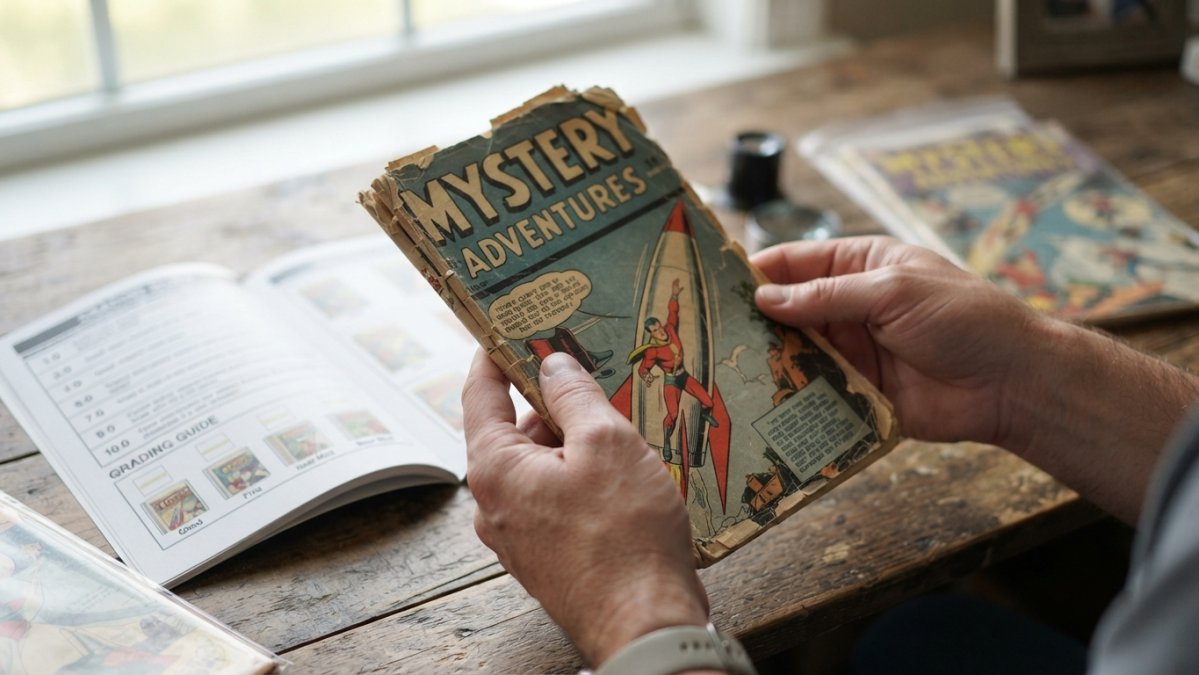
Comic Book Grading and Condition: Why It Matters
Condition is the difference between a valuable comic and a worthless one. The same issue in different conditions can have vastly different prices.
Raw comics are ungraded books you own as-is. They're cheaper to acquire but harder to sell because buyers can't verify condition independently. Slabbed comics are professionally graded and sealed in protective cases by third-party graders. The grade is printed on the slab, making condition transparent and standardized.
Professional grading uses a scale from 0.5 (Poor) to 10.0 (Gem Mint). Higher grades command exponentially higher prices. A comic graded 9.0 might sell for three times the price of the same issue graded 7.0. This is why serious investors send valuable comics for professional grading, the cost of grading pays for itself through higher resale value.
Wear and tear accumulate from handling, storage, and time. Frayed edges, sagging spines, discoloration, and creases all reduce grade. Even small defects drop a comic's grade significantly. This is why preservation matters so much, how you store and handle your collection directly impacts its future value.
Most casual collectors buy raw comics and accept lower grades. If you're serious about investment potential, professional grading becomes cost-effective for comics worth more than a few hundred dollars. The grading fee typically ranges based on the comic's declared value, but the transparency it provides often justifies the expense for valuable issues.
Valuable Comic Books from the 1970s and Other Key Decades
Different decades produced different collector favorites, each with distinct value drivers.
1930s-1940s comics are extremely rare because few survived. These Golden Age books command premium prices when found. However, most people won't encounter them casually, they're held by serious collectors and institutions.
1960s comics saw the rise of Marvel and the birth of modern superhero storytelling. First appearances from this era, like Amazing Fantasy #15 (1962) with Spider-Man's debut, are among the most valuable comics ever printed.
1970s comics offer a middle ground. They're old enough to have scarcity appeal but recent enough that more copies survived than 1940s issues. Key 1970s issues appreciate steadily but rarely spike in value.
1980s-1990s comics were printed in massive quantities. Most issues from this era have low value because supply far exceeds demand. However, key first appearances and limited variants from this period can still hold value.
Modern variants and limited runs from the 2000s onward represent a different collecting category. These aren't yet "vintage," but some already show appreciation. The difference is that modern print runs are documented and finite, making rarity easier to verify upfront.
The best decade for value appreciation depends on your budget and goals. Older comics offer historical significance but cost more. Newer comics offer affordability but less proven track records.
Comic Book Collecting as an Investment: Realistic Returns and Risks
If you're hoping collecting vintage comic books will generate returns like a stock portfolio, adjust your expectations.
Comic book values do appreciate, but not consistently or predictably. Some comics gain value steadily. Others plateau or decline.
The best-case scenario involves buying undervalued comics before they gain mainstream attention, then selling as demand rises. This requires research, timing, and luck. You need to identify which characters or storylines are poised for cultural relevance before the market prices them in.
More realistically, most collectors see modest appreciation if they hold for years. A comic purchased for $500 might sell for $700 a decade later, a 40% gain over 10 years, or roughly 3.4% annually. That's reasonable but not spectacular compared to stock market returns.
The risks are real. Your collection could decline in value if demand shifts, if condition deteriorates despite your efforts, or if the broader market softens. You also face liquidity challenges, selling vintage comics takes time. You can't instantly convert your collection to cash like you can with stocks.
Successful comic investors treat their collections as long-term holdings, not quick flips. They buy comics they genuinely enjoy, which makes the holding period feel less painful. They also diversify across multiple issues and decades rather than betting everything on one comic.
The True Cost of Collecting: Storage, Preservation, and Grading Expenses
The sticker price of a comic is just the beginning. Serious collecting requires ongoing investment in preservation.
Protective supplies are essential. Acid-free bags, boards, and boxes prevent deterioration. Storage boxes designed for comics cost more than regular cardboard but protect your investment. For valuable comics, you might add climate-controlled storage to prevent temperature and humidity fluctuations that damage paper.
Professional grading adds significant cost. Grading fees depend on the declared value of the comic, but expect to pay between $20 and $100+ per comic for professional assessment. If you're grading multiple comics, costs accumulate quickly.
Insurance is often overlooked but important. If you're building a valuable collection, homeowners insurance may not cover it fully. Specialty collectibles insurance ensures you're protected against loss or damage. Annual premiums vary based on collection value.
Ongoing maintenance includes monitoring storage conditions, occasionally inspecting comics for damage, and replacing protective materials as they degrade. This isn't expensive but requires attention.
For casual hobbyists buying comics under $100 each, these costs are minimal. You might spend $50-100 per year on basic protective supplies and storage. For serious investors with collections worth thousands, annual preservation costs can exceed several hundred dollars.
The key insight: your total cost of ownership includes more than purchase price. Factor in storage, preservation, and potential grading fees when calculating whether collecting makes financial sense for your situation.
Vintage vs. Modern Comics: Where Your Money Goes Further
The choice between vintage and modern comics involves different trade-offs.
Vintage comics (pre-1980s) offer historical significance and proven scarcity. If a comic survived 50+ years in collectible condition, you know it's rare. Demand is established, collectors worldwide actively seek key vintage issues. The downside: vintage comics cost more upfront.
Modern comics (2000s onward) cost less to acquire. You can build a substantial collection on a modest budget. Print runs are documented, so you know exactly how rare a variant is. The uncertainty is whether demand will persist.
For budget-conscious collectors, modern comics offer better entry points. You can experiment, learn the market, and build experience without massive financial commitment. Many successful collectors start with modern comics, then graduate to vintage as their knowledge and budget grow.
For those seeking immediate collectibility and proven demand, vintage comics make sense despite higher costs. You're buying into established collector interest rather than betting on future demand.
A practical strategy combines both. Allocate most of your budget to a few key vintage issues with strong collector demand, then fill the rest of your collection with affordable modern comics you enjoy. This balances the stability of vintage collecting with the accessibility of modern comics.
The real advantage goes to collectors who research thoroughly regardless of era. An informed buyer of modern comics beats an uninformed buyer of vintage comics every time.
Conclusion: Is It Worth Your Investment?
Collecting vintage comic books is worth it if you're clear about what "worth it" means to you.
If your primary goal is joy and nostalgia, collecting is absolutely worth pursuing. Comics connect us to stories and characters that matter to us. Building a collection of books you love brings genuine pleasure. The financial returns are secondary, nice if they happen, but not the point.
If your primary goal is financial return, collecting can work, but expect modest appreciation over long holding periods. Treat it like a long-term alternative investment, not a get-rich scheme. Buy quality key issues, preserve them carefully, and hold for years. Diversify across multiple comics rather than betting on one. And accept that some purchases won't appreciate.
If you're somewhere in the middle, enjoying the hobby while hoping for some value appreciation, that's the most common approach. This mindset keeps you engaged in collecting while managing expectations about returns.
The decision ultimately depends on your budget, your passion for comics, and your financial goals. Start small, learn the market, and expand gradually.
Frequently Asked Questions
Are vintage comic books worth money?
Yes, but only specific ones. Key issues, first appearances of major characters, and comics in high grades command real value. A 1962 Amazing Fantasy #15 (first Spider-Man appearance) can sell for thousands, while most common comics from any era sell for under $10. Rarity, condition, and demand determine whether your collection holds resale value or sits in boxes.
How do I tell if my comic book is valuable?
Check for key issues (first appearances, major story arcs), limited print runs, and current condition. Research sold listings on platforms like eBay and specialized comic databases to see actual prices paid. Professional grading services assign numeric grades that directly impact value. A beat-up copy of a valuable issue may sell for 10-20% of what a well-preserved copy brings.
Is comic book collecting as an investment actually profitable?
Returns are inconsistent and require significant expertise. Collectors who buy low-grade comics, hold them 10+ years, and sell during nostalgia peaks have seen modest gains (2-5% annually). However, storage, grading fees ($15-$100+ per book), and selling costs eat into profits. Most casual collectors break even or lose money. Treat it as a hobby first; financial returns are secondary.
Does comic book condition really affect its value?
Dramatically. A comic in mint condition can be worth 5-10 times more than the same issue in poor condition. Professional grading uses a 0.5-10 scale; even one grade difference shifts prices significantly. Preservation costs (archival boxes, acid-free bags, climate control) are real but necessary if you want resale value. Neglected collections deteriorate fast and become nearly worthless.
Collecting vintage comic books doesn't have to drain your budget or consume your life. Start by identifying which comics genuinely excite you, learn how condition and rarity drive value, and invest in basic preservation supplies that protect your purchases. Republic Mercantile makes it easy to discover unique collectibles and everyday essentials in one place, helping you build your collection without breaking the bank. Shop Now and start your comic collecting journey with confidence.