

Last Updated: October 25, 2026
Quick Summary
Online thrift shopping is buying secondhand clothing, jewelry, and household goods through digital marketplaces instead of visiting physical stores. Success requires knowing your measurements, reading descriptions carefully, checking seller ratings, and understanding return policies before purchasing.
- Measure your bust, waist, hip, sleeve length, and inseam before shopping online.
- Always ask sellers for specific measurements rather than relying on size tags, which vary dramatically across brands and decades.
- Read seller descriptions word-for-word, examine every photo provided, and message sellers with questions about condition and fit.
- Compare return policies before buying; buyer protection programs typically allow returns within 5-7 days if items don't match descriptions.
- Start with one marketplace like Poshmark, Depop, or Vinted, then set up saved searches for items you actually need.
Table of Contents
- Understanding Online Thrift Shopping Basics
- How to Buy Used Clothes Online Without Guessing
- How to Check Clothing Condition Online Before Purchasing
- Secondhand Clothing Size Guide for Online Shoppers
- Comparing Online Thrift Store Return Policies
- Building a Smart Shopping Strategy for Thrift Marketplaces
- Start Your First Online Thrift Purchase Today
- Frequently Asked Questions
Understanding Online Thrift Shopping Basics
Online thrift shopping is buying secondhand clothing, jewelry, and household goods through digital marketplaces instead of visiting physical stores. It combines the treasure-hunt excitement of thrift stores with the convenience of shopping from home. At Republic Mercantile, we understand that beginners often worry about quality, fit, and authenticity when they can't touch items in person.
The appeal is straightforward. Pre-owned items cost far less than retail prices. You access rotating inventory from multiple sellers without driving between locations. You can shop at 11 PM in your pajamas. But online thrift shopping requires a different skill set than in-store browsing. You're reading descriptions instead of inspecting seams.
Here's what makes the difference between smart shoppers and frustrated ones: preparation. Most beginners jump in without a plan, buy impulsively, and end up disappointed. The successful ones take time upfront to learn the platforms, understand sizing, and develop a systematic approach.
Key differences from in-store thrifting:
- You can't try items on before buying
- Return policies vary widely by platform and seller
- Shipping costs and delivery times affect your total cost
- Photos and descriptions are your only quality indicators
- You need to know your exact measurements across brands
How to Buy Used Clothes Online Without Guessing
Buying used clothes online without guessing starts with knowing exactly what you're looking for before you search. Vague browsing leads to impulse purchases and returns. Specific criteria lead to keeper finds.
Start by identifying your actual needs. Do you need everyday work blouses? Casual weekend wear? Specific brands you trust? Winter coats in particular colors? Write down three to five concrete items you'd wear regularly.
Next, measure yourself honestly. Grab a soft measuring tape and check:
- Bust (around the fullest part)
- Waist (at your natural waist)
- Hip (around the fullest part of hips)
- Sleeve length (from shoulder to wrist)
- Inseam (from crotch to ankle)
Write these numbers down and keep them handy when shopping. Sizing varies dramatically across brands and decades. A vintage 1990s size 12 fits nothing like a modern size 12.
When you're ready to search:
- Use specific keywords: "vintage Levi's 501 size 32" beats "jeans"
- Filter by price range to match your budget
- Sort by newest listings to see fresh inventory
- Read seller descriptions word-for-word for condition details
- Check return policies before clicking buy
Consumer Reports' guide to online shopping safety recommends verifying seller ratings and reading recent customer feedback before making any purchase.
Common mistakes at this stage: buying multiple sizes "just in case," assuming descriptions are accurate without verification, and ignoring shipping costs that can add 20-30% to your total spend.
How to Check Clothing Condition Online Before Purchasing
Checking clothing condition online means reading descriptions carefully, examining every photo, and asking sellers specific questions before you commit.
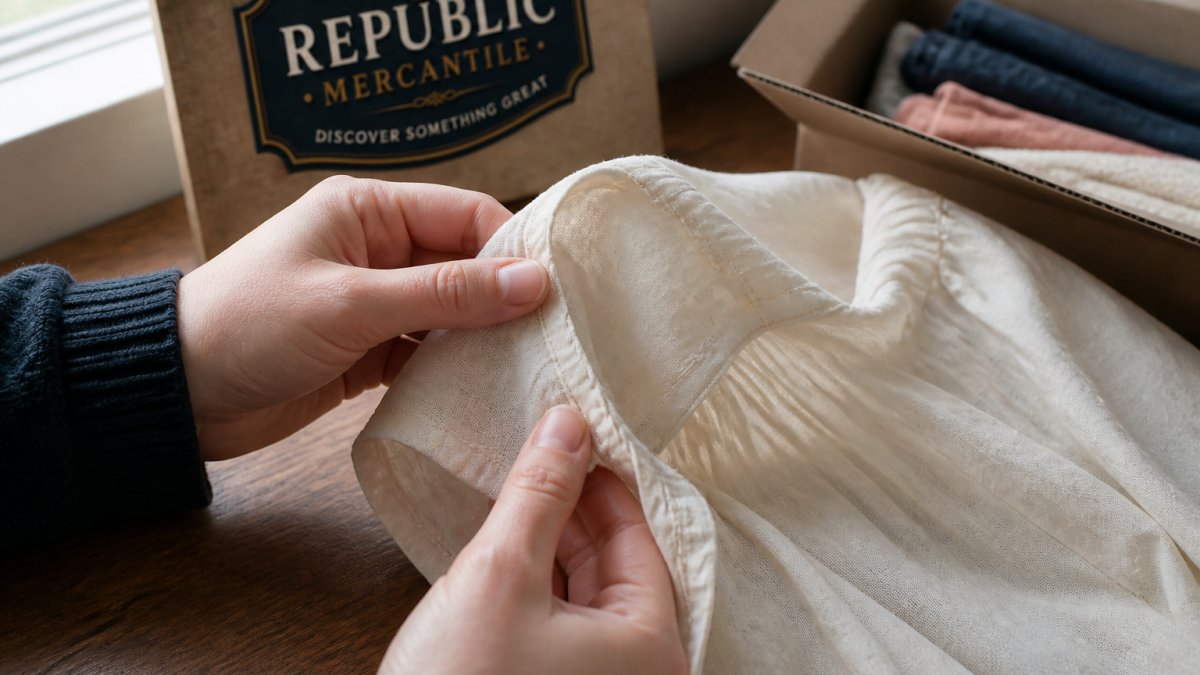
Start with the product description. Sellers should disclose condition honestly.
Examine every photo the seller provides. Look for:
- Stains, discoloration, or fading
- Holes, tears, or loose seams
- Pilling or fuzzing on fabric
- Faded elastic or worn cuffs
- Zipper or button condition
- Overall fabric texture and sheen
If a listing has only one or two photos, ask for more. Sellers should show the front, back, sleeves, and any problem areas. If they won't provide additional photos, skip that item.
Red flags in listings:
- "As-is, no returns" combined with vague descriptions
- Only close-up shots (hiding overall condition)
- Photos taken in poor lighting
- Descriptions that don't match the photos
- Prices suspiciously low for the brand
Check the fabric content too. A blouse listed as 100% cotton behaves differently than a cotton-polyester blend. Synthetic fabrics hold stains differently and don't breathe the same way.
Secondhand clothing often has minor wear, that's normal and expected. What you're screening for is damage that affects wearability: major stains you can't remove, significant pilling, broken zippers, or missing buttons.
Secondhand Clothing Size Guide for Online Shoppers
Sizing across brands is inconsistent, and vintage clothing sizes don't match modern sizing. A vintage size 10 from the 1980s might fit like a modern size 6. European brands size differently than American brands. Men's and women's sizing varies by era and manufacturer.
The only reliable approach: compare your measurements to the seller's measurements, not the size tag. If a seller lists "size 10 vintage Levi's," ask them to measure the waist, inseam, and rise. Then compare those measurements to your own.
Standard measurement conversions to memorize:
- Bust: measure around the fullest part of your chest
- Waist: measure at your natural waist (usually at belly button level)
- Hip: measure around the fullest part of your hips
- Sleeve: measure from the center back neck, across shoulder, down to wrist
- Inseam: measure from crotch to ankle on the inside of your leg
When you find an item you like, message the seller and ask: "Can you measure the bust, waist, and length?" Most will respond within 24 hours. If they won't measure, move on.
Brand-specific sizing notes:
- Vintage Levi's runs small; add 2-4 inches to the tagged size
- European brands (Zara, H&M) typically run one size smaller than American brands
- Thrifted designer pieces (Coach, Ralph Lauren) often run true to size or slightly large
- Homemade or vintage items have no standard sizing, measurements are everything
Keep a spreadsheet of items you've purchased that fit well. Record the brand, size, and actual measurements. Over time, you'll recognize which sellers measure accurately and which brands fit your body best.
Comparing Online Thrift Store Return Policies
Return policies determine whether a bad purchase becomes a learning experience or a financial loss. Before you buy anything, read the return policy completely.
Most online thrift marketplaces fall into three categories:
48 pc Manifested Reseller's Wholesale Box - New Long Sleeve Blouses Tops Shirts →
Buyer protection programs (Poshmark, Depop, Vinted): These platforms hold seller funds temporarily and allow returns within a window (usually 5-7 days) if the item doesn't match the description. You typically pay return shipping. These offer moderate protection but have limits, they won't cover fit issues, only condition mismatches.
Seller-specific policies (eBay, Facebook Marketplace): Each seller sets their own rules. Some offer 30-day returns; others are final sale. Read carefully before buying.
No returns (some Etsy vintage sellers): Certain sellers, especially those selling rare or one-of-a-kind pieces, don't accept returns. These are high-risk purchases.
Federal Trade Commission's return policy requirements state that sellers must clearly disclose return policies before purchase.
Questions to ask before buying:
- What's the return window (5 days? 14 days? 30 days?)
- Who pays return shipping?
- What qualifies as returnable (wrong size? doesn't match description? both?)
- How long does a refund take after the seller receives the item?
- Can you return if the item doesn't fit?
How to Return Online Clothes Easily: A Step-by-Step Guide provides detailed guidance on the return process itself, but knowing the policy upfront prevents most problems.
Many beginners make this mistake: they buy from sellers with no returns because the price is slightly lower.
Best practice: Start with platforms that offer buyer protection.
Online thrift platforms offer different levels of buyer protection and return options.
| Platform Type | Return Window | Who Pays Shipping | Covers Fit Issues |
|---|---|---|---|
| Buyer protection programs | 5-7 days | Buyer | No |
| Seller-specific policies | Varies by seller | Varies by seller | Varies by seller |
| No returns | None | N/A | No |
Building a Smart Shopping Strategy for Thrift Marketplaces
A smart strategy combines regular browsing, saved searches, and intentional shopping patterns. Beginners often shop randomly and feel overwhelmed. Strategic shoppers find deals consistently.
Step 1: Choose your platforms. Different marketplaces have different inventory and seller bases. Poshmark focuses on fashion and has strong buyer protection.
Step 2: Set up saved searches for items you actually need. Most platforms let you save searches and get notifications when new listings match.
Step 3: Develop a price anchor. Know what items cost new, then set a maximum you'll pay secondhand.
Step 4: Shop seasonally with intention. Winter coats are cheaper in spring. Summer dresses are cheaper in fall.
Step 5: Follow sellers you trust. If a seller consistently provides accurate descriptions, measures carefully, and ships promptly, follow them.
Best Budget Friendly Clothing Stores outlines affordable shopping options, but building your strategy around consistent sellers on thrift platforms often beats buying from traditional budget retailers.
Common shopping mistakes to avoid:
- Buying without a plan (leads to impulse purchases)
- Ignoring shipping costs (they add up fast)
- Buying multiple sizes (hoping one fits)
- Not reading seller feedback (one bad experience teaches you)
- Chasing trends instead of building a wardrobe
Start Your First Online Thrift Purchase Today
Your first online thrift purchase should be low-stakes. Pick an item you need, from a seller with strong ratings and clear return policies. Something under $30 is ideal for learning.
Here's your action plan:
- Measure yourself (bust, waist, hip, sleeve, inseam)
- Choose one marketplace (Poshmark, Depop, or Vinted)
- Search for one specific item (e.g., "vintage Levi's 32")
- Read three listings completely
- Message the seller with questions about measurements and condition
- Review their return policy
- Make your purchase
When the item arrives, inspect it carefully against the description. Did it match what the seller said? Was the condition accurate? Did it fit? These answers teach you what to look for next time.
How to Verify Clothing Quality Online provides detailed guidance on quality assessment once items arrive, helping you evaluate whether future purchases meet your standards.
Republic Mercantile understands that smart shopping, whether thrift or new, starts with knowledge. We stock new and curated items with the same attention to quality and value.
Your first thrift purchase is the beginning of a skill. With each buy, you'll get better at spotting quality, understanding fit, and finding deals. Start simple, learn from experience, and enjoy the hunt.
Frequently Asked Questions
How do you know if secondhand clothes are good quality when shopping online?
Check the product photos carefully for stains, pilling, fading, or loose seams. Read the seller's description of wear and tear honestly. Look for natural fabrics like cotton, wool, or linen rather than cheap synthetics. Check the brand, established retailers and designer labels typically hold quality better. Ask the seller specific questions about condition if photos aren't clear. Quality secondhand items should show minimal wear and retain their original shape.
What should you check before buying thrifted clothes online?
Verify measurements against your own, not just listed sizes, since sizing varies by brand. Examine all product photos for damage, stains, or discoloration. Read the seller's condition notes carefully, words like 'excellent' or 'like new' mean different things. Check the return policy and shipping costs before committing. Confirm the fabric content and care instructions. Review seller ratings and feedback from other buyers. Ask for additional photos of problem areas if you're unsure.
How do you find the right size when shopping secondhand online?
Measure a garment that fits you well and compare those measurements to the listing, not the labeled size. Secondhand clothing from different eras and brands sizes inconsistently, a vintage size 10 may fit differently than modern size 10. Check the seller's size chart if provided. Look at buyer reviews mentioning fit. Ask the seller directly about how the item runs. When in doubt, choose the larger size, alterations are easier than returns. Keep a record of your measurements for reference across platforms.
What happens if clothes don't fit or have issues when they arrive?
Review the seller's return policy before purchasing, some require you to pay return costs. Document everything with photos and messages if there's a problem. Contact the seller immediately if the item doesn't match the description. Most reputable online thrift platforms have buyer protection if an item is significantly misrepresented. Keep original packaging and receipts. Understand that final-sale items typically cannot be returned, so read those labels carefully.
Online thrift shopping saves money while building a unique wardrobe, but only when you approach it strategically. The difference between successful thrift shoppers and frustrated ones comes down to preparation, measurement accuracy, and knowing what to look for. Republic Mercantile makes it easy to mix thrifted finds with new pieces, giving you access to fresh inventory, fast shipping, and great prices all in one place. SHOP NOW and start building smarter.
