

Table of Contents
- Define Your Collection Theme and Set Clear Goals
- Identify Anchor Pieces That Define Your Direction
- Where to Find Rare Collectibles: Estate Sales, Flea Markets, and Beyond
- Start Small and Build Your Budget Strategically
- Best Things to Collect for Profit and Long-Term Value
- Display Ideas for Small Collections and Storage Solutions
- Research, Catalog, and Preserve Your Collection
- Frequently Asked Questions
Last Updated: October 1, 2026
Define Your Collection Theme and Set Clear Goals
To start a unique collection, begin with a clear, specific theme. Instead of "I collect things," aim for "I collect CMC Mint metal art bars" or "I collect polished gemstone cabochons." This specificity helps you spot genuine finds and avoid impulse purchases that don't fit.

Set realistic goals early. Ask yourself:
- Why am I starting this collection?
- What's my budget for the first year?
- How much space do I have to display items?
- Am I collecting for enjoyment, investment, or both?
Writing these goals down keeps you focused and prevents scattered acquisitions. Define your theme before your first purchase.
Research your niche by visiting flea markets, browsing online marketplaces, and joining collector communities. This teaches you what's available, rare, and overpriced.
Identify Anchor Pieces That Define Your Direction
Anchor pieces define your collection's character, they're rare, historically significant, or visually striking. An anchor piece doesn't need to be expensive; it must be meaningful to your theme. A CMC Mint German Silver Alloy Art Bar, for example, is distinctive, quality-crafted, and a clear statement of your collecting direction.

Look for anchor pieces with strong provenance, the documented history of an item. A piece with a known maker or previous owner tells a story that generic items cannot and adds value and authenticity.
When evaluating potential anchor pieces, consider:
- Condition and patina (the natural aging that develops character)
- Rarity within your chosen niche
- Authenticity and serial numbers or maker marks
- Visual appeal and how it anchors your theme
Anchor pieces often come from estate sales, specialized dealers, or established collectors downsizing. These sources typically offer better selection than casual thrift stores.
Where to Find Rare Collectibles: Estate Sales, Flea Markets, and Beyond
Finding quality collectibles requires knowing where to look. Each source has advantages and challenges.
Estate sales offer curated items with documented history. Arrive early with cash; best pieces sell within the first hour. Flea markets provide variety and negotiation; develop authenticity skills by learning your niche and talking to vendors. Thrift stores require patience and regular visits. Online marketplaces demand detailed searches, provenance documentation, and close-up photos. Specialized dealers charge premiums but guarantee authentication for expensive anchor pieces. Collector networks often yield better prices and honest appraisals than public markets.
Start Small and Build Your Budget Strategically
When you start a unique collection, overspending early often leads to regret. Spend your first month observing prices, learning quality standards, and identifying what genuinely appeals to you.
A practical first-year budget might look like:
- Anchor piece: 40% of budget
- Regular finds: 40% of budget
- Display and storage: 20% of budget
This approach lets you invest in one quality anchor piece while building complementary items without overcommitting.
Track spending with a simple spreadsheet noting purchase price, source, and acquisition date. Selectivity builds stronger collections than volume; a dozen carefully chosen pieces outperform fifty random acquisitions.
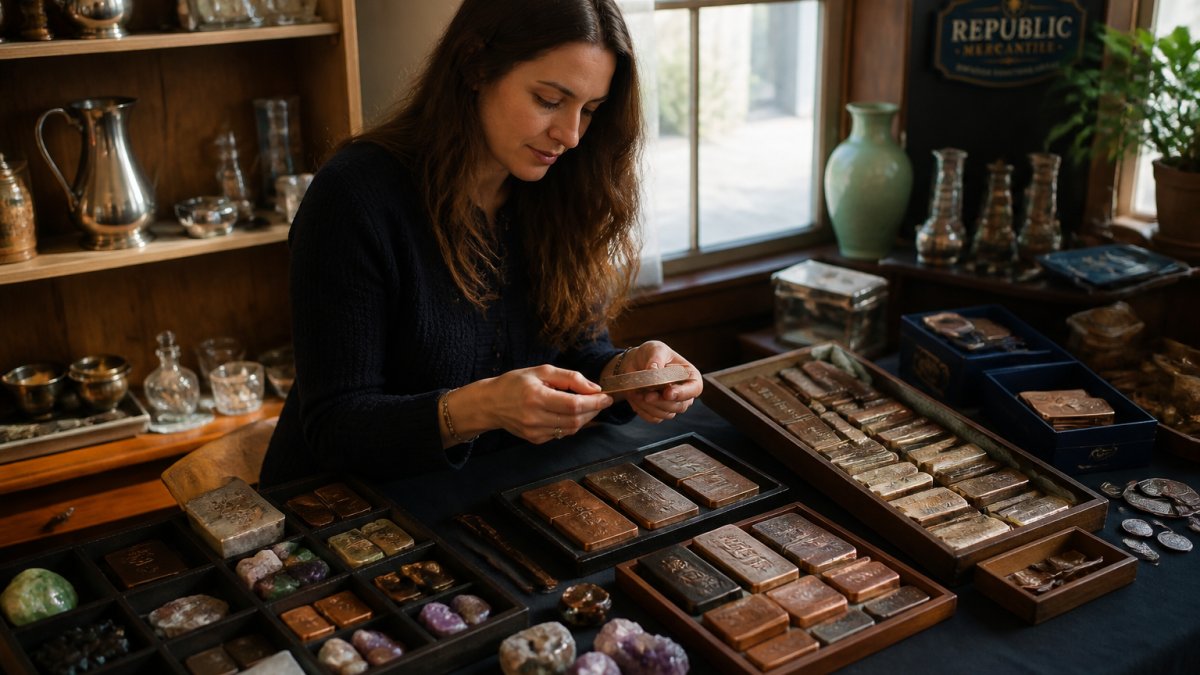
Republic Mercantile offers curated collectibles at accessible price points. Items like the 3pc Polished Oval Gemstone Cabochon Collector Set start at just $7.95, letting beginners build quality collections affordably.

Best Things to Collect for Profit and Long-Term Value
Understanding why collections appreciate requires learning to appraise and protect what you own, most beginners skip this and later regret it when they cannot document value for insurance or resale.
Understanding Collectible Valuation
Value depends on four factors: rarity, condition, provenance, and demand. A CMC Mint 1 oz .999 Titanium Art Bar Ingot holds value because all four factors align, pristine condition when new, documented maker marks, and an active collector base seeking titanium pieces.
Insuring Your Collection
CMC Mint German Silver Alloy Art Bar - Collector Edition →
Items That Appreciate Versus Depreciate
Tracking Appreciation Over Time
Display Ideas for Small Collections and Storage Solutions
How you display your collection affects both enjoyment and preservation. Proper display protects items while showcasing them beautifully.
Research, Catalog, and Preserve Your Collection
Documentation increases value, but the most common beginner mistake is confusing collecting with hoarding. The difference determines whether your collection becomes an asset or a burden.
Curating Versus Hoarding: The Critical Distinction
Creating a Meaningful Catalog
Create a simple inventory with these fields:
- Item name and description: Be specific. "Metal art bar" is vague. "CMC Mint 1 oz .999 Titanium Art Bar Ingot, serial #TI-2024-0847" is catalogable.
- Acquisition date and source: Where did you find it? Estate sale, flea market, dealer, online? This context adds to the collection's story.
- Purchase price: Track what you paid. Over time, this shows whether your collecting category appreciates or depreciates.
- Condition notes: Describe surface finish, patina, any damage or restoration. Use consistent grading language (mint, excellent, very good, good, fair, poor).
- High-quality photographs: Shoot from multiple angles with consistent lighting and background. Include close-ups of maker marks, serial numbers, and any notable features.
- Provenance documentation: Attach scans of certificates, receipts, or historical information.
Research and Historical Significance
- Maker or manufacturer: Who created it? What was their reputation? CMC Mint, for example, has a documented history of precision metalwork, which collectors value.
- Production dates and runs: When was it made? Was it part of a limited series? Limited-edition pieces hold value better than open-production items.
- Historical context: What was happening when this item was made? A gemstone cabochon from the 1960s carries different cultural weight than one from the 1990s.
- Rarity indicators: How many were produced? How many survive in good condition? Rarity drives value.
Preservation by Material Type
Preservation requires attention to material-specific needs. Generic storage fails.
Metal pieces (art bars, vintage tin, silver-like alloys):
- Store in dry environments below 50% humidity. Moisture causes tarnish and oxidation.
- Use anti-tarnish strips (activated charcoal or silica-based) in storage containers. Replace strips annually.
- Avoid PVC-based storage materials, which off-gas sulfur compounds that accelerate tarnish. Use acid-free boxes and tissue.
- Handle with cotton gloves to prevent skin oils from damaging finishes.
- Polish only when necessary using appropriate metal-specific cleaners. Over-polishing removes patina that collectors value.
Gemstones and polished cabochons:
- Store individually in padded compartments to prevent scratching.
- Avoid direct sunlight, which fades some stones over time.
- Keep away from heat sources, which can cause thermal shock and cracking in some materials.
- Use acid-free tissue and storage boxes.
- Handle minimally; skin oils can dull polished surfaces.
Vintage and aged items (books, paper, textiles):
- Maintain stable temperature (65-70°F) and humidity (30-40%). Fluctuations cause expansion and contraction that damages materials.
- Use acid-free storage materials exclusively.
- Avoid direct sunlight and fluorescent lighting, which fade colors.
- Store vertically (for books) or flat (for textiles) to prevent warping.
Regular Inspection and Maintenance
- Tarnish or discoloration on metals
- Cracks or chips on gemstones
- Mold or foxing on paper items
- Loose components or deteriorating bindings
Frequently Asked Questions
What's the best way to start a unique collection on a tight budget?
Begin by choosing a specific theme that excites you, then allocate a realistic monthly budget. Start with affordable anchor pieces like the CMC Mint Titanium Art Bar ($11.89) or Gemstone Cabochon sets ($7.95) from Republic Mercantile. Visit estate sales and thrift stores where you'll find quality items at lower prices. Focus on acquiring fewer, higher-quality pieces rather than filling your collection quickly. This approach builds authentic provenance and keeps your collection manageable while you learn about your niche.
How do I decide what to collect if I'm just starting out?
Choose something that genuinely interests you, whether metals, gemstones, vintage items, or another category. Research what collectors in that niche value, including rarity, condition, and historical significance. Look at existing collections online to understand the range of possibilities. Republic Mercantile offers curated starter pieces like the CMC Mint German Silver Alloy Art Bar and polished gemstone sets that introduce you to quality collectibles. Your passion matters more than profit potential when starting; the best collections reflect the collector's authentic interests.
Is collecting a good investment for beginners?
Collecting can appreciate in value if you focus on items with proven demand, rarity, and good condition. However, treat your collection primarily as a hobby you enjoy rather than a guaranteed investment. Research historical price trends for your chosen niche before committing significant funds. Proper documentation, storage, and insurance protect your collection's value over time. Some items, limited editions, authenticated vintage pieces, and rare metals, hold value better than others. Start with pieces you'd be happy keeping even if they don't appreciate.
Where should I look for rare collectibles beyond online retailers?
Estate sales, flea markets, and thrift stores are goldmines for unique finds at competitive prices. Estate sales often feature authenticated vintage and antique items with documented provenance. Flea markets let you inspect items in person and negotiate prices. Thrift stores offer unexpected discoveries at low cost. Online auctions and specialized collector forums also connect you with sellers. Republic Mercantile regularly updates inventory with fresh collectibles, providing convenient access to curated pieces. Always verify authenticity and condition before purchasing, and ask sellers about the item's history and provenance.
Building a unique collection is a journey of discovery. Start with a clear theme, invest in an anchor piece that excites you, and grow thoughtfully. Republic Mercantile makes this easier with curated collectibles like our CMC Mint metal art bars and polished gemstone cabochons, all available at competitive prices with fast shipping. Begin your collection today with pieces that hold real value and genuine appeal.