

Table of Contents
- How to Spot Quality Home Goods: Start with the Basics
- Material Composition: Know What You're Buying
- How to Tell If Furniture Is Good Quality
- What to Look for When Buying Home Decor
- Tactile and Visual Inspection Checklist
- Red Flags: Signs of Poor Craftsmanship
- Best Online Home Goods Retailers and How to Shop Smart
- Chemical Off-Gassing and Lifecycle Cost Analysis
- Spotting Counterfeits and Mass-Produced Knock-Offs
- Frequently Asked Questions
Last Updated: September 3, 2026
How to Spot Quality Home Goods: Start with the Basics
Spotting quality home goods requires examining material composition, construction methods, and finishing details. The difference between a piece lasting decades and one failing in two years often comes down to specific markers most casual shoppers overlook. At Republic Mercantile, we understand that budget-conscious buyers need practical ways to assess quality without expert knowledge or expensive tools.
The fundamental skill is learning to inspect what you're buying: understanding materials, examining how components join, and recognizing signs of rushed manufacturing versus thoughtful craftsmanship. Whether shopping for furniture, decor, or home organization, the same principles apply across categories.

Most shoppers rely on price as a proxy for quality, but that's unreliable. Well-made pieces at reasonable prices exist, as do poorly constructed items at high prices. The real skill is developing a checklist that separates genuine quality from marketing claims.
Material Composition: Know What You're Buying
Understanding what materials you're purchasing is the foundation of smart home goods shopping. Different materials have vastly different durability profiles, maintenance requirements, and long-term value.
Solid Wood vs. Veneer vs. Particleboard
Solid wood is wood throughout the piece. Veneer is a thin quality wood layer glued over cheaper substrate. Particleboard is compressed wood particles bonded with adhesive. These three methods define wooden furniture durability and longevity.
Solid wood withstands refinishing, repair, and decades of use. A solid wood table can be sanded and restained. Veneered pieces can sometimes be repaired, but damage penetrating the veneer layer often means replacement. Particleboard cannot be meaningfully repaired once damaged.

To identify construction type, inspect edges and undersides. Solid wood shows consistent grain patterns throughout. Veneer shows a thin wood layer over different material underneath, visible at edges or where veneer has lifted. Particleboard shows compressed particles with plastic edge banding.
Weight matters significantly. Solid wood is substantially heavier than veneer or particleboard of similar dimensions. A wooden dresser feeling light relative to its size is likely particleboard or heavily veneered. This weight-to-quality assessment serves as a quick preliminary filter.
Veneered pieces aren't automatically inferior; high-end veneering on stable substrates lasts decades. The issue is particleboard, which swells when exposed to moisture and degrades faster. In humid environments like kitchens or bathrooms, particleboard fails noticeably quicker.
Natural Fibers vs. Synthetic Materials
Upholstery and soft goods present different material assessment challenges. Natural fibers like cotton, wool, and linen have different performance characteristics than synthetics like polyester and nylon.
Natural fibers breathe, age visibly, and generally feel more substantial. They're often more expensive upfront but can be repaired or reupholstered. Wool resists staining better than cotton. Linen develops character over time.
Synthetic materials resist staining, dry quickly, and are often cheaper. They don't breathe as well, can feel plasticky, and typically can't be repaired. Polyester blends are common because they balance cost with durability.
Check fabric content labels when available. A blend that's 80% natural fiber with 20% synthetic often performs better than 100% synthetic. Run your hand across upholstery: natural fibers have texture and irregularity, while synthetics feel smoother. Tightly woven fabric resists wear better than loosely woven. Press your thumb into fabric; it should spring back rather than stay compressed.
How to Tell If Furniture Is Good Quality
Furniture quality hinges on how components are joined and finished, not just materials used.
Structural Integrity and Joinery
The way wood pieces connect determines whether a chair holds your weight for 20 years or wobbles after six months.
Joinery methods, from best to worst:
- Mortise and tenon joints: a projecting piece (tenon) fits into a cavity (mortise). The gold standard.
- Dovetail joints: interlocking wedge-shaped cuts. Extremely strong and visible on drawer fronts.
- Dowel joints: wooden pegs hold pieces together. Solid but less strong than mortise and tenon.
- Pocket hole joinery: screws driven from hidden angles. Functional but less durable.
- Staples and nails: the cheapest approach. Weak for load-bearing connections.
- Glue alone: unreliable unless combined with other methods.
Examine corners and joints. Quality furniture shows visible joinery fitted carefully with minimal gaps. Poor quality hides weak connections under upholstery or finish.
Test for distortion by pushing and pulling on the piece. A quality chair or table should feel rigid. Flexing, creaking, or shifting indicates weak joinery. Grab opposite corners of a table and try to twist it; there should be no movement.
Check drawers and moving parts. They should slide smoothly without binding or excessive looseness. Drawer bottoms should be solid and fit snugly in the frame. Hinges should feel substantial.
Hardware and Finishing Details
Hardware, hinges, handles, and knobs reveal a manufacturer's commitment to quality. Cheap hardware looks thin, feels loose, and fails quickly. Quality hardware feels solid, operates smoothly, and lasts.
Examine hinges on cabinets, doors, and storage boxes. They should be substantial with multiple mounting points. A single screw holding a hinge is a red flag. The hinge should operate smoothly through its full range without binding.

Handles and knobs should be securely attached. Grab them and try to wiggle them; movement indicates loose mounting. Quality hardware is attached with multiple fasteners and feels immovable.
Look at finishing details. Surfaces should be smooth without rough spots, drips, or uneven coating. Run your hand across wood finishes; they should be even and smooth. Paint or stain should have consistent color and coverage. Edges should be finished, not raw.
Check the underside and back of pieces. Quality manufacturers finish all surfaces, not just visible ones. Rough, unfinished undersides suggest cost-cutting. Even the back of a dresser or bookcase should have finished surfaces.
Seams in upholstery should be straight, tight, and evenly spaced. Crooked seams or loose stitching indicate rushed manufacturing. Pull gently on seams; they should not separate or pucker.
What to Look for When Buying Home Decor
Decor quality assessment differs slightly from furniture, though the same principles of material and craftsmanship apply.
Weight-to-Quality Assessment
A useful heuristic across home decor categories: quality items generally weigh more than cheap counterparts. This isn't universal, but it's reliable enough to serve as a preliminary filter.
A ceramic vase should feel substantial and solid, not hollow and thin-walled. Picture frames should have weight and presence. Decorative boxes should be sturdy. Textiles should have heft and density.
This rule works because quality materials are denser. Solid ceramic is heavier than thin ceramic. Thick glass weighs more than thin glass. Genuine metal hardware weighs more than pot metal or plastic alternatives.
Pick up items and assess weight relative to size. A small object feeling surprisingly heavy likely uses quality materials. Something feeling too light for its size probably uses cheap fillers or thin materials.
Tactile and Visual Inspection Checklist
Develop a hands-on inspection routine before purchasing. This tactile assessment catches issues that photographs and descriptions miss.
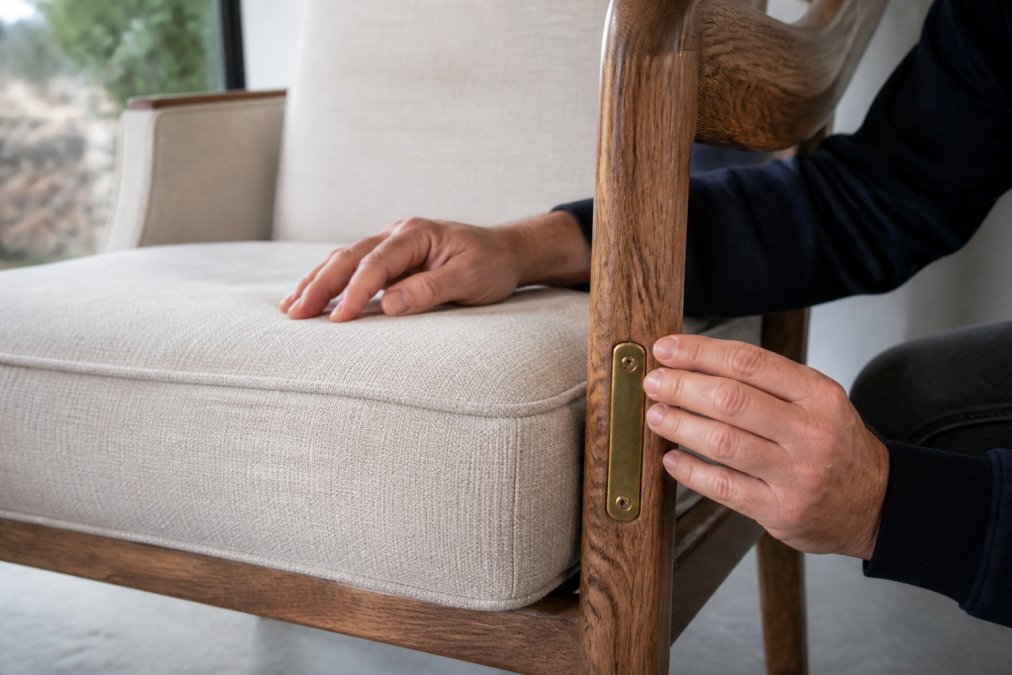
Run through these checks systematically:
- Surfaces: Smooth or rough? Even finish or inconsistent? No drips, bubbles, or rough spots.
- Seams: Straight and tight or crooked and loose? Stitching even or uneven?
- Joints: Gaps visible or tight connections? Quality joinery or hidden weak points?
- Hardware: Solid and secure or loose and thin? Smooth operation or binding?
- Weight: Substantial or flimsy? Quality materials?
- Edges: Finished and smooth or raw and rough?
- Underside: Finished surfaces or raw materials?
- Movement: Rigid or flexible? Wobbles, creaks, or rock-solid?
This checklist takes two minutes per item and catches most quality issues. When shopping online, ask sellers for photos of seams, joints, undersides, and hardware. Reputable sellers provide detailed images; those refusing often have something to hide.
Red Flags: Signs of Poor Craftsmanship
Certain markers consistently indicate poor quality and should trigger immediate skepticism.
Visible cost-cutting: Unfinished edges, raw wood showing, plastic trying to look like metal, thin materials where substantial ones should be.
Assembly shortcuts: Visible staples instead of stitching, nails instead of joinery, adhesive instead of proper fastening. These fail quickly under normal use.
Inconsistent finishing: Uneven paint, patchy stain, drips, bubbles in finish, color variation across surfaces.
Loose components: Handles that wiggle, hinges that bind, drawers that stick or are too loose, wobbling legs or frames.
Thin materials: Walls that flex, hollow-sounding pieces, lightweight items that should feel substantial.
Poor joinery visibility: Weak connections hidden under upholstery, gaps at joints, visible glue squeeze-out that wasn't cleaned.
Odor: Strong chemical smell indicates high VOC off-gassing, meaning poor quality materials and finish.
These red flags often appear in combination. A piece showing multiple warning signs is almost certainly poor quality.
Best Online Home Goods Retailers and How to Shop Smart
Shopping online for home goods requires strategies to assess quality without hands-on inspection. Republic Mercantile offers a diverse selection of home goods with quality standards aligned with smart buying principles.
When evaluating online retailers, request detailed product photography showing seams, joints, hardware, and undersides. Quality retailers provide these images because they showcase construction quality. Those with only styled, angled photos often hide manufacturing details.
Read customer reviews specifically for durability comments. Look for patterns in failure modes. Multiple reviews mentioning seams separating, joinery failing, or hardware loosening signal construction quality issues. Positive reviews mentioning longevity indicate quality.
Check return policies. Retailers confident in quality offer easy returns. Restrictive policies often indicate products won't satisfy customers long-term.
Look for product specifications detailing materials, dimensions, and construction methods. Cheap retailers skip this information. Quality retailers provide wood type, upholstery composition, joinery methods, and finish details, indicating confidence in their products.
New inventory rotation, like Republic Mercantile maintains, means you're getting current products rather than overstock, often resulting in better quality control.
Chemical Off-Gassing and Lifecycle Cost Analysis
Quality assessment extends beyond visible construction to material health and long-term value.
Off-gassing occurs when volatile organic compounds (VOCs) from finishes, adhesives, and materials release into your home. Strong chemical smell indicates high VOC materials. Quality pieces use low-VOC finishes and adhesives, resulting in minimal odor. This matters for indoor air quality, especially in bedrooms.
Lifecycle cost analysis means calculating total cost of ownership, not just purchase price. A cheap piece lasting two years costs more per year of use than an expensive piece lasting ten years.
Calculate like this:
- Cheap item: $200 purchase price, 2 years of use = $100 per year
- Quality item: $600 purchase price, 10 years of use = $60 per year
The quality item costs less per year despite higher upfront cost. Add replacement hassle, disposal, and shopping time, and quality becomes even more economical.
Spotting Counterfeits and Mass-Produced Knock-Offs
As quality home goods become more desirable, counterfeits and unauthorized knock-offs proliferate online.
Genuine products from established manufacturers have consistent branding, packaging, and construction. Counterfeits often show inconsistencies: misspelled brand names, poor quality logos, or packaging that looks almost right but slightly off.
Check product specifications against the manufacturer's official website. Counterfeit dimensions, materials, or features won't match. Prices significantly below market rates often indicate counterfeits.
Purchase from authorized retailers. Republic Mercantile curates its home goods selection to ensure authenticity and quality. Unauthorized sellers on third-party marketplaces frequently sell counterfeits.
Examine packaging carefully. Genuine products have professional packaging with consistent printing and correct branding. Counterfeits often show printing inconsistencies or cheap-feeling packaging.
Verify serial numbers or product codes if included. A quick check on the manufacturer's website often reveals whether the serial number is legitimate.
Mass-produced knock-offs, legal imitations copying design without infringing patents, show similar quality issues to counterfeits through cheaper materials, weaker joinery, and inferior finishes.
Finding quality home goods requires systematic assessment of materials, construction methods, and finishing details. The checklist approach, examining weight, joinery, hardware, seams, and surface quality, catches most quality issues before purchase. Shopping at retailers like Republic Mercantile that prioritize quality control and provide detailed product information significantly reduces the risk of purchasing poorly made items. When you invest time in assessment and choose retailers committed to quality, your home goods last longer, perform better, and ultimately cost less per year of use.
Frequently Asked Questions
How can I tell if home decor materials are durable or cheap?
Check the weight first: quality decor typically feels substantial and well-balanced. Inspect seams and joints for tight, even stitching with no gaps. Run your hand over the surface to feel for rough spots or uneven finishes. Look at hardware (hinges, handles, fasteners) for solid construction. Cheap materials often feel flimsy, have loose threads, and use thin metal or plastic hardware that shows wear quickly.
What are the tell-tale signs of high-quality furniture construction?
Quality furniture exhibits solid wood frames (not particleboard), mortise-and-tenon joinery or doweled joints, and finished wood underneath. Check that drawers glide smoothly and sit flush. Examine upholstery for tight seams, high textile density, and natural fiber content. The weight should be substantial but proportional to size. Look for hand-finished details like stained or sealed edges. Avoid pieces with visible staples, loose padding, or sagging support.
How do I spot counterfeit or mass-produced knock-offs when shopping online?
Compare product photos across multiple sources, counterfeits often show inconsistent grain patterns or finishes. Check manufacturing origin details; many knock-offs list vague or suspicious sources. Review customer feedback carefully for comments about durability and material quality. Authentic pieces typically have consistent branding, proper labeling, and detailed construction descriptions. Be wary of prices significantly below market value for similar items, as this often indicates lower-quality materials or inferior craftsmanship.
What should I look for when inspecting kitchenware quality?
Examine handles for secure attachment and heat-resistant materials. Check weight distribution, quality cookware feels balanced and substantial. Look for smooth, even finishes without dents, scratches, or rough spots. Test that lids fit snugly and handles stay cool. For bakeware, inspect for uniform thickness and smooth edges. Read customer feedback about durability and heat distribution. Avoid pieces with loose rivets, thin metal, or plastic components that might warp under heat.
This article was written using GrandRanker