

Table of Contents
- What Makes Footwear Worth Buying: Categories and What to Expect
- Athletic and Work Footwear: Performance Features That Matter
- How to Choose Comfortable Walking Shoes That Actually Support You
- Footwear Sizing Guide: How to Get the Right Fit Every Time
- Material Quality and What It Means for Durability
- How to Clean and Maintain Leather Shoes (and Other Materials)
- Foot Health, Biomechanics, and Sustainable Choices
- Conclusion
Last Updated: August 14, 2026
What Makes Footwear Worth Buying: Categories and What to Expect
Footwear is one of those purchases where the wrong choice costs you twice: once at checkout, and again every day you spend on your feet regretting it. At Republic Mercantile, we've put together this footwear buying guide to cut through the noise and help you find shoes that genuinely work for your life, your budget, and your feet.
The footwear market divides neatly into a few core categories, and understanding which one you actually need is the first decision worth making. Most shoppers default to whatever looks good in the photo. That's how you end up with stylish shoes that wreck your arches by noon.
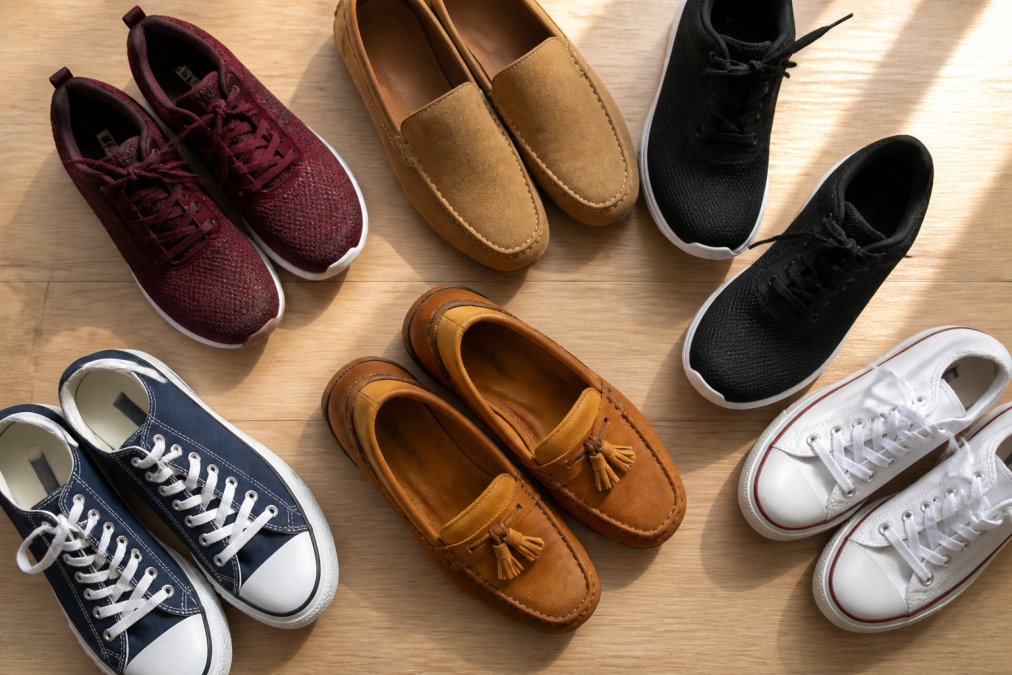
Here's a quick reference for the main footwear categories and what to prioritize in each:
| Category | Key Feature to Prioritize | Best For |
|---|---|---|
| Athletic sneakers | Cushioning, breathability, traction | Daily activity, gym, light running |
| Casual shoes / loafers | Comfort, fit, flexible outsole | Everyday wear, errands, work |
| Canvas high-tops | Ankle support, durability | Casual outings, style-forward looks |
| Work boots | Safety toe, slip-resistant sole | Job sites, industrial environments |
| Walking shoes | Arch support, shock absorption | Long walks, travel, standing all day |
Men's Shoes: Casual, Athletic, and Work Styles
Men's footwear breaks into three lanes that rarely overlap as much as people think. Casual shoes need flexibility and a comfortable footbed. Athletic shoes need midsole technology that absorbs impact. Work styles need durability and, depending on the job, specific safety certifications.
For casual everyday wear, slip-on loafers are hard to beat. The Kricely Men's Slip-On Loafers in Tan (Size 10) at $29.00 are a strong example: lightweight construction, a flexible outsole, and a design built for all-day comfort without the fuss of laces.
Work styles demand more. Look for reinforced heel stability, a slip-resistant outsole with real tread pattern depth, and materials that hold up to daily abuse. Genuine leather or thick synthetic uppers are the standard.
Women's Shoes: Sneakers, Slip-Ons, and Everyday Styles
Women's footwear options have expanded well beyond the false choice between comfort and style. The best everyday shoes now combine ergonomic design with a modern aesthetic, and you don't have to spend a lot to find them.
Two solid options worth knowing: the Women's Athletic Slip-On Sneakers (Size 8) at $19.95 feature breathable mesh material and a supportive sole designed for all-day wear, and the Women's Black Athletic Shoes (Size 8.5) at $23.95 add a non-slip sole and lightweight construction to a clean, versatile look. Both are orthotic-friendly designs that leave room for custom insoles if you need extra arch support.


For something with more personality, the Warrior Classic High Top Canvas Shoes (Ladies Size 6.5) at $16.95 deliver ankle support and a durable canvas upper at a price that makes them an easy decision.

Kids' Shoes: Sizing, Durability, and Value
Kids' footwear is where most families overspend on style and underspend on fit. The priority order should be: correct sizing first, durability second, style third.
Children's feet grow quickly, so fit and sizing checks every few months matter more than the brand name on the side. Look for shoes with a thumb's width of space at the toe, secure closures that kids can manage independently, and outsoles with genuine wear resistance. A shoe that falls apart in six weeks is never a bargain regardless of the original price.
Athletic and Work Footwear: Performance Features That Matter
Performance footwear is not just marketing language. The structural differences between a true athletic shoe and a casual sneaker are significant, and they affect how your body handles impact across thousands of steps.
Athletic and Performance Shoes
Athletic shoes are built around three functional priorities: shock absorption, traction, and breathability. The midsole technology determines how much impact force reaches your joints. A thicker, well-engineered midsole reduces fatigue on hard surfaces. The outsole material determines grip: rubber compounds with deep tread patterns handle wet surfaces and varied terrain better than flat, thin soles.
Moisture-wicking liners and mesh uppers make a real difference on active days. Feet that stay dry stay comfortable. Feet that stay comfortable keep moving. That chain matters more than most buyers realize when they're shopping.
Lightweight construction is another underrated factor. Heavier shoes create more fatigue over long distances, even if they feel fine in the first hour.
Work Boots and Safety Toe Requirements
Work boots operate under a different set of requirements entirely. The Occupational Safety and Health Administration (OSHA) sets standards for foot protection in workplaces where injury risks exist, and according to OSHA foot protection standards, employers must ensure workers use protective footwear where there is danger of foot injuries from falling or rolling objects, objects piercing the sole, or electrical hazards.
Safety toe options include steel toe, composite toe, and aluminum toe. Steel toe offers the highest impact protection. Composite toe is lighter and non-conductive, which matters in environments with electrical hazard exposure. Aluminum toe falls between the two in weight and protection level.
Beyond the toe box, look for:
- Slip-resistant outsoles rated for the specific surface you work on
- Ankle support appropriate to the terrain
- Waterproof membrane if outdoor or wet conditions are involved
- Electrical hazard (EH) rating where relevant
How to Choose Comfortable Walking Shoes That Actually Support You
The best walking shoes for everyday use combine arch support, a cushioned footbed, and a flexible outsole that bends where your foot naturally bends. Stiff shoes that don't flex through the ball of the foot force your gait into an unnatural pattern, which adds strain to your knees and lower back over time.
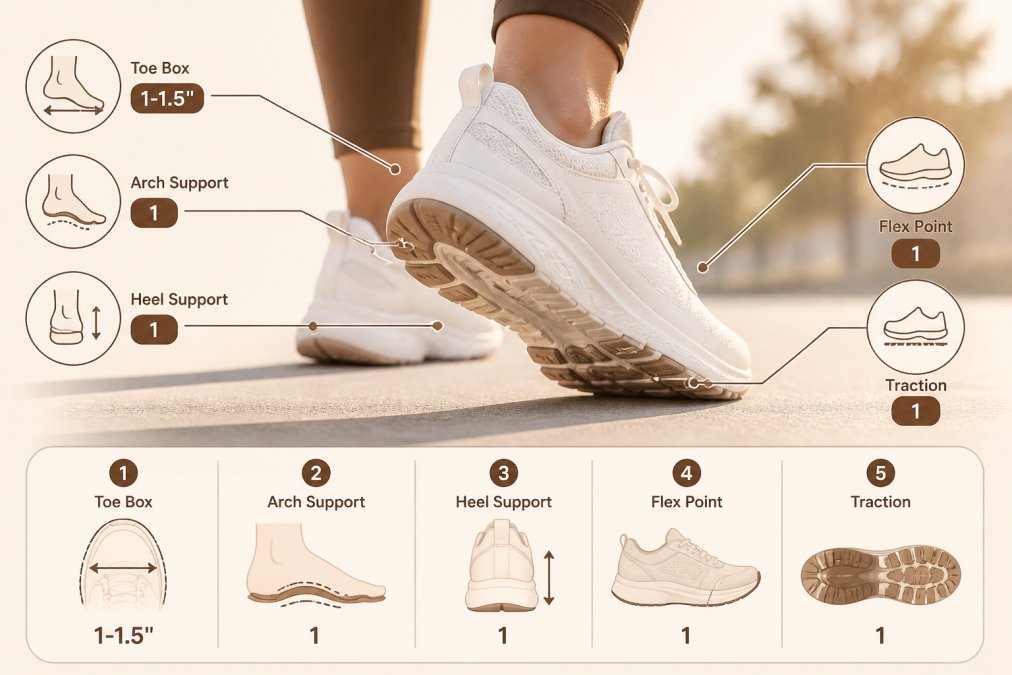
Start with the footbed. A shoe with a contoured footbed or built-in arch support does more for all-day comfort than any external feature. If the shoe is orthotic-friendly, you can always upgrade the insole for a custom fit.
Next, check heel stability. The heel counter, the stiff cup at the back of the shoe, should hold your heel firmly without pinching. Excessive heel movement causes blisters and contributes to plantar fasciitis over time.
Finally, consider the outsole material. Rubber outsoles with a defined tread pattern handle varied surfaces safely. Thin, flat outsoles wear down quickly and offer minimal shock absorption on hard floors or pavement.
Footwear Sizing Guide: How to Get the Right Fit Every Time
A footwear sizing guide is only useful if you measure correctly. Foot size changes throughout the day: feet swell slightly by afternoon, which means shoes that fit perfectly at 9 a.m. may feel tight by 3 p.m. Always measure and try on shoes later in the day when your feet are at their largest.
The standard fit-and-sizing check:
- Measure both feet. Most people have one foot slightly larger than the other. Size to the larger foot.
- Check toe clearance. There should be roughly a thumb's width between your longest toe and the end of the shoe.
- Test width. The widest part of your foot should align with the widest part of the shoe without pinching or excessive space.
- Heel check. Your heel should sit firmly in the heel cup without slipping when you walk.
- Lace or strap adjustment. Tighten laces or straps and walk. The shoe should feel secure without pressure points.
According to American Podiatric Medical Association shoe fitting guidance, poorly fitting shoes are a leading cause of foot problems including bunions, hammertoes, and neuromas. Getting the size right is not a minor detail.
Material Quality and What It Means for Durability
Footwear durability comes down to what the shoe is made of and how those materials are assembled. The upper material, the part that wraps your foot, determines breathability, water resistance, and long-term wear resistance.
Genuine leather is the most durable upper material for casual and dress footwear. It molds to your foot over time, resists abrasion, and with proper care, lasts years longer than synthetic alternatives. The trade-off is weight and break-in time.
Synthetic uppers, including mesh and engineered fabrics, offer lighter weight and better breathability. They're the standard for athletic footwear because moisture-wicking properties and airflow matter more than longevity in high-activity contexts. The downside: synthetic materials generally show wear faster and don't respond as well to repair or conditioning.
Canvas sits between the two. It's breathable, flexible, and holds up well under moderate use. Canvas high-tops like the Warrior Classic are a reliable choice for casual wear because the material is forgiving, easy to clean, and maintains its structure without special care.
The outsole material matters just as much as the upper. Rubber outsoles with defined tread patterns offer the best combination of traction and wear resistance. Thin EVA foam outsoles are lighter but compress over time, losing their shock absorption properties.
How to Clean and Maintain Leather Shoes (and Other Materials)
Most shoes fail before their time not because of poor construction but because of poor maintenance. Knowing how to clean and maintain leather shoes, canvas sneakers, and athletic mesh is one of the highest-return habits a footwear buyer can develop.
Leather shoes:
- Wipe down with a slightly damp cloth after each wear to remove surface dirt
- Apply a leather conditioner every four to six weeks to prevent cracking and maintain flexibility
- Use a cedar shoe tree when storing to hold shape and absorb moisture
- Polish with a matching color wax polish to restore surface and protect against water damage
- Never dry leather shoes with direct heat; let them air dry naturally
Canvas shoes:
- Remove laces before cleaning
- Scrub with a soft brush and mild soap solution; avoid soaking the canvas
- Air dry away from direct sunlight, which can yellow the material
- Treat with a fabric protector spray to reduce future staining
Athletic mesh and synthetic uppers:
- Wipe down after workouts with a damp cloth
- For deeper cleaning, hand wash with mild detergent; machine washing degrades adhesives and midsole foam faster than most people expect
- Rotate between two pairs of athletic shoes to allow full drying between uses, which extends midsole life significantly
According to foot care guidance from the American Academy of Orthopaedic Surgeons, maintaining proper footwear condition directly affects foot health, as worn-down soles and degraded cushioning change gait mechanics in ways that increase injury risk.
Foot Health, Biomechanics, and Sustainable Choices
Foot health and biomechanics are the angles most footwear guides skip entirely. That's a mistake, because the shoes you wear daily shape how your entire body moves.
Biomechanics is the study of how forces act on the body during movement. In the context of footwear, it means understanding how your foot strikes the ground, how your arch absorbs and distributes load, and how the shoe either supports or disrupts that process. Poor footwear choices that misalign gait can contribute to knee pain, hip discomfort, and lower back strain over time.
Gait analysis, which involves observing how you walk or run, can identify whether you overpronate, supinate, or have a neutral gait. Each pattern benefits from different types of arch support and midsole construction. Many specialty footwear retailers offer basic gait analysis, and some physical therapists provide it as part of a broader assessment.
For everyday buyers, the practical takeaway is this: if you regularly experience foot fatigue, heel pain, or shin discomfort after wearing a particular shoe, the shoe is not supporting your biomechanics correctly.
Sustainable manufacturing is increasingly relevant to footwear buyers who want to understand what they're purchasing. The footwear industry's environmental footprint is significant, as noted by environmental impact of the footwear industry. Buyers who want to make more considered choices can look for brands that disclose their material sourcing, use recycled or natural materials where possible, and provide information on their production standards.
Republic Mercantile's rotating inventory means you'll regularly find footwear options at accessible price points, including styles across men's, women's, and casual categories. The combination of fast shipping and competitive pricing makes it practical to refresh your footwear without overspending.
Frequently Asked Questions
What are the most important factors when choosing comfortable footwear?
Arch support, cushioning, and a proper fit are the three factors that matter most. A shoe should hold your heel firmly without slipping, leave about a centimeter of space at the toe, and flex where your foot naturally bends. Breathability and a slip-resistant outsole add everyday comfort and safety. For walking or standing all day, look for an orthotic-friendly footbed and shock absorption in the midsole to reduce fatigue.
How should proper footwear fit to prevent foot pain?
Your longest toe should sit about a thumbnail's width from the end of the shoe. The widest part of your foot should align with the widest part of the shoe without pinching. Heel stability matters too, your heel should not lift when you walk. Feet swell slightly through the day, so try shoes on in the afternoon when your feet are at their largest to avoid a fit that feels fine in the morning but hurts by evening.
What is the difference between men's and women's shoe sizing?
Men's and women's shoe sizes in the US use the same scale but are offset by roughly 1.5 sizes. A women's size 8 is approximately a men's size 6.5. Width designations also differ: men's shoes run wider by default. If you are buying unisex or cross-shopping styles, always check the listed measurements in centimeters rather than relying on the size number alone to ensure an accurate fit.
How often should you replace everyday shoes?
Most everyday shoes show meaningful wear after 300 to 500 miles of use, or roughly 8 to 12 months of daily wear. The clearest signs you need a replacement are compressed cushioning that no longer springs back, uneven outsole wear that throws off your gait, and upper material that has broken down at the heel or toe box. Rotating between two pairs extends the life of both by giving each pair time to decompress between wearings.
Good footwear is one of those investments that pays back every single day. Finding the right pair requires knowing what to look for across materials, fit, and function. Republic Mercantile makes that easier with a regularly updated selection of footwear across styles and sizes, priced to work for real budgets. Browse the current footwear collection and find your fit today. SHOP NOW.
This article was written using GrandRanker