

Table of Contents
- Fast Shipping Online Retail Standards 2026: What Shoppers Now Expect
- Ecommerce Shipping Statistics 2026: The Data Behind Delivery Demands
- Average Delivery Time Expectations and What They Cost Retailers
- Free Shipping Threshold Strategy: Balancing Speed and Cost
- How Small Online Retailers Can Compete on Fast Shipping Without Losing Margins
- Returns Logistics and Sustainability: The Hidden Costs of Faster Delivery
- Frequently Asked Questions
Last Updated: September 12, 2026
Fast Shipping Online Retail Standards 2026: What Shoppers Now Expect
The bar for fast shipping online retail standards 2026 has moved again, and it moved in one direction: faster. Shoppers who once tolerated a week-long wait now treat three to five days as the outer limit, and many treat two-day delivery as the default. This guide breaks down what that means for retailers, where the costs hide, and how smaller operations can compete without gutting their margins.
The core tension is simple to state and hard to solve. Speed sells, but speed costs. Every day you shave off a delivery window adds handling labor, carrier fees, and inventory complexity.
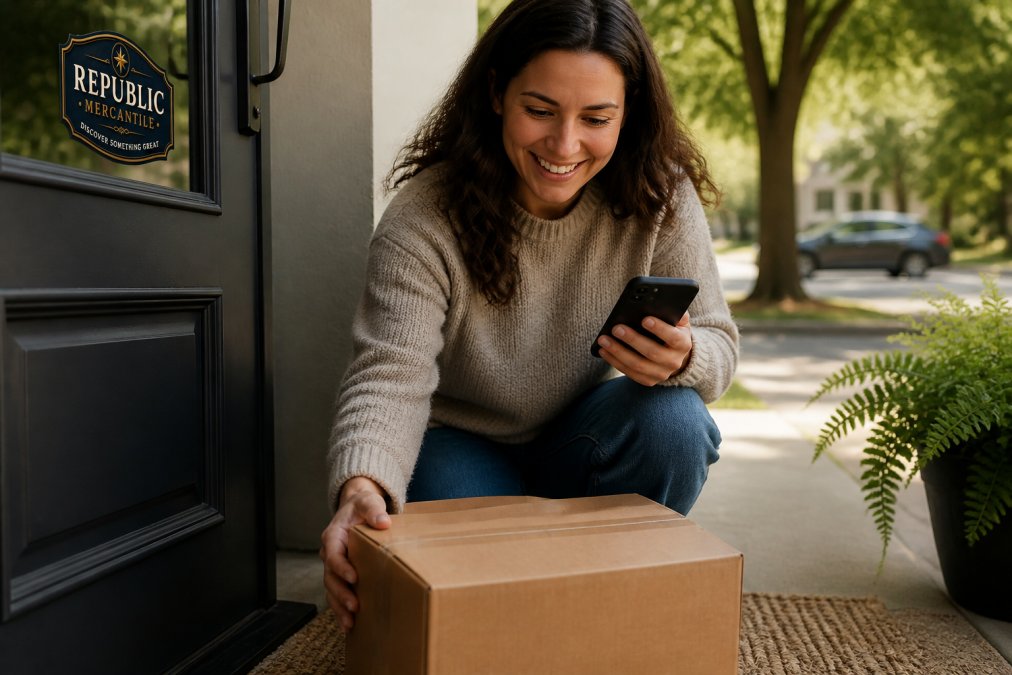
The shift from free shipping to fast shipping
Free shipping was the battleground for a decade. It is no longer the deciding factor. According to consumer delivery expectation research from the National Retail Federation, delivery speed has overtaken shipping cost as the primary reason shoppers choose one retailer over another.
That reversal changes the math. A retailer that absorbed shipping costs to advertise "free" now has to absorb them and hit a two-day window. The old playbook does not cover both.
Ecommerce Shipping Statistics 2026: The Data Behind Delivery Demands
The ecommerce shipping statistics 2026 picture is one of rising expectations meeting rising costs. The U.S. Department of Commerce retail e-commerce data shows online sales continuing to grow faster than total retail, which means more parcels moving through the same carrier networks. More volume, same roads. That is the squeeze.
But raw growth numbers are not the story. The story is how shoppers now measure the clock, and where retailers lose them.
Three shifts define the year, and each one has a mechanism behind it:
- Two-day delivery is the baseline, not the upgrade. Next-day shipping is the premium tier. The reason is carrier network design: ground zones that once took four to five days have compressed as regional hubs multiplied, so "two-day" is now achievable on standard ground for a large share of the population. Retailers who still advertise "fast shipping" as a differentiator are advertising table stakes.
- Order processing time is now part of the promise. Shoppers count the clock from checkout, not from when the label prints. A retailer that ships same-day but delivers in four days beats one that ships in three days and delivers in three. The lesson is that your "handling time" field on a product page is a conversion lever, not a warehouse note.
- Delivery transparency drives retention. Tracking updates and accurate ETAs reduce "where is my order" contacts and cancellations. The mechanism is simple: uncertainty is what triggers the support ticket, not lateness itself. A package that is late but clearly tracked generates far fewer contacts than one with a stale status.
A fourth pattern is less obvious and more expensive. Split shipments are rising. As catalogs widen and inventory spreads across more nodes, a single order increasingly ships from two or three locations. Each split adds a parcel, a tracking number, and a delivery window the customer has to reconcile. Most retailers do not measure split rate at all, which means they do not see the cost until it shows up in freight spend.
What the numbers do not tell you
Statistics describe the demand side. They do not describe the cost side, and the cost side is where most small and mid-sized retailers get hurt. A benchmark that says "shoppers expect two-day delivery" is useless without the companion question: two-day from where, at what per-parcel cost, and with what return rate?
That is why the next section moves from expectations to the actual cost drivers behind them.
Average Delivery Time Expectations and What They Cost Retailers
Average delivery time expectations sit at two to four days for most categories, and hitting that window costs money at every step. The U.S. Small Business Administration guidance on e-commerce operations notes that fulfillment and logistics are among the fastest-growing cost lines for small online sellers.
Here is where the money goes when you promise speed:
| Cost Driver | What Triggers It | Typical Impact |
|---|---|---|
| Expedited carrier rates | Two-day or next-day promises | Higher per-parcel cost |
| Fulfillment center proximity | Distance to customer | Longer zones, higher rates |
| Split shipments | Out-of-stock items | Double shipping spend |
| Returns processing | Faster delivery, more returns | Added labor and freight |
The last row is the one nobody budgets for. Faster delivery raises return rates because shoppers order more freely when they expect quick arrival.
Free Shipping Threshold Strategy: Balancing Speed and Cost
A free shipping threshold is the minimum order value a customer must reach to qualify for free delivery. Setting it correctly is the difference between a profitable shipping policy and a slow leak in your margins.
The threshold is not a marketing gimmick. It is a margin tool.
Using average order value to set profitable thresholds
Your average order value (AOV) is the anchor. A threshold set just above your current AOV nudges customers to add one more item, which offsets the shipping cost you absorb.
A workable approach:
- Calculate your current AOV from the last 90 days of orders.
- Estimate your average shipping cost per parcel.
- Set the threshold roughly 10 to 20 percent above AOV.
- Test for two weeks and watch both AOV and cart abandonment.
- Adjust in small increments, not large jumps.
A common mistake is setting the threshold too high. Push it past what feels reachable and cart abandonment climbs faster than AOV.
How Small Online Retailers Can Compete on Fast Shipping Without Losing Margins
Most 2026 shipping content is written for retailers with a fulfillment network and a logistics team. This section is not. Small retailers cannot outspend large ones on logistics, so they compete on structure instead. The winning move is a fulfillment strategy that reduces distance and handling, not one that promises the fastest possible delivery at any cost.
The gap most small retailers fall into is treating "fast shipping" as a single decision. It is actually four decisions, and they should be made in order, because each one changes the math for the next.
Step 1: Decide your delivery promise before your carrier
Your promise is the window you advertise at checkout. It should be built from your actual processing time plus your realistic transit time, not from what a competitor advertises. A common pattern is a retailer promising two-day delivery, then discovering that their own pick-and-pack takes a full business day, which quietly turns the promise into three days and generates a wave of "late" complaints that were never actually late.
The fix is to publish a range, not a point. "Arrives in 3-5 business days" is honest, defensible, and converts nearly as well as a tighter promise you cannot keep.
Step 2: Cut distance before you cut price
Transit cost is driven mostly by zone, not by carrier. Two parcels of identical weight can differ in cost by a wide margin depending on how many zones they cross. For a small retailer, the highest-leverage move is usually not negotiating a better carrier rate, it is storing inventory closer to where orders come from.
Options, roughly in order of cost and complexity:
- Regional fulfillment partnerships. Storing inventory in a third-party warehouse closer to a dense customer region cuts transit zones and cost. The trade-off is control: you depend on someone else's processing speed, and their cutoff times become your cutoff times.
- A second small node. Some retailers keep a satellite stock of their top-selling SKUs in a second location, even a small one, to serve a specific region. This works only if the SKUs are genuinely high-velocity; otherwise you duplicate slow inventory and pay for it twice.
- Carrier-agnostic rate shopping. Comparing live rates per order, rather than locking into one carrier contract, often saves more than switching carriers entirely. The mechanism is that no single carrier is cheapest for every lane, weight, and destination.
Step 3: Automate the work that does not need a human
Logistics automation is the cheapest first step, and it is where small retailers get the most return per dollar. The specific tasks worth automating are the repetitive ones that scale with order volume:
- Automated label generation and rate shopping, so no one is manually comparing carrier quotes.
- Inventory sync across sales channels, so you do not oversell and trigger split shipments or cancellations.
- Order routing rules, so an order ships from the node closest to the customer automatically.
- Tracking and ETA notifications, which reduce inbound support contacts more than almost any other automation.
The trade-off is real: automation has a setup cost and a learning curve, and it works best once order volume is steady enough to justify it. Below a certain volume, manual processes are genuinely cheaper.
Step 4: Use thresholds to consolidate, not just to upsell
Shipping thresholds are usually framed as a marketing tool to raise average order value. For a small retailer, they are also a fulfillment tool. Consolidating orders into fewer, larger parcels reduces per-order handling and can reduce split shipments.

The discipline is to set the threshold from your own numbers, not from a competitor's. A threshold set just above your current average order value nudges customers to add one more item, which offsets the shipping cost you absorb. Push it too high and cart abandonment climbs faster than average order value.
The honest trade-off
A small retailer cannot win a speed arms race against a national competitor, and should not try. The realistic position is "fast enough, reliably, at a cost that holds." That means competing on accuracy of promise, transparency of tracking, and consolidation of orders, three things that cost structure and discipline rather than capital.
The retailers that get this right in 2026 are not the fastest. They are the ones whose customers stop thinking about shipping at all, because the window they were given was the window they got.
Returns Logistics and Sustainability: The Hidden Costs of Faster Delivery
Returns logistics and sustainability are the two costs that fast shipping hides best. Both surface later, and both hit margin.
Faster delivery encourages more ordering and more returning. Every returned parcel travels twice, which raises freight costs and carbon footprint at the same time. Retailers that ignore this end up subsidizing speed through their returns budget.
The practical fix is a clear, honest shipping policy that states return windows and who pays return freight. Shoppers accept a paid return when it is stated upfront. They do not accept a surprise.
For retailers building a fast shipping model that holds up, a curated one-stop catalog helps. Republic Mercantile offers a diverse selection of everyday essentials, clothing, and home goods. Browse the 48 pc Manifested Reseller's Wholesale Box for a sense of how bulk inventory supports consolidation.

Frequently Asked Questions
What are the new consumer expectations for shipping speed in 2026?
Most online shoppers now expect orders to arrive within two to three days, and many treat next-day or same-day delivery as a deciding factor. Fast shipping has moved from a bonus to a baseline requirement, especially for repeat purchases. Retailers that display clear delivery timelines at checkout see fewer abandoned carts and higher conversion rates. Meeting these expectations usually requires a combination of nearby fulfillment centers, real-time tracking, and transparent order processing times.
How do free shipping thresholds impact online retail conversion rates?
Free shipping thresholds encourage larger baskets by giving shoppers a concrete reason to add one more item. A threshold set slightly above your average order value nudges customers to reach it rather than pay for shipping. However, if the threshold is too high or the delivery window is slow, shoppers may abandon the cart entirely. The most effective approach pairs a reasonable threshold with fast shipping options so customers feel they are getting both value and speed.
How can small businesses compete with major retailers on shipping speed?
Small retailers can compete by focusing on regional fulfillment, same-day processing cutoffs, and transparent communication rather than trying to match national same-day networks. Partnering with third-party logistics providers or using local warehouses reduces last-mile delivery time without massive infrastructure investment. Automation tools for order routing and label printing also cut operational overhead. The goal is to be reliably fast within your service area, not everywhere at once.
What is causing shipping delays in 2026?
Delays in 2026 come from a mix of higher parcel volumes, carrier capacity limits, and rising fuel and labor costs that push some retailers toward slower, cheaper shipping models. Weather events and port congestion still disrupt supply chains intermittently. Retailers that build buffer time into their promised delivery windows and offer accurate tracking reduce the damage to customer retention. Transparency about potential delays often matters more to shoppers than a perfect on-time record.
Fast shipping online retail standards 2026 reward retailers who build speed into their structure rather than bolting it on as a promise. The challenge is holding a two-day expectation without letting fulfillment and returns costs eat the margin. Republic Mercantile was built for exactly this: a wide range of everyday essentials and unique finds, new inventory added regularly, great prices, and fast shipping on every order. Shop now and get what you need in one place, delivered quickly.