

Table of Contents
- What Is Ethical Jewelry?
- Why Ethical Jewelry Matters
-
Ethical Jewelry Materials and Sourcing
- Gold: Recycled, Fairmined, and the Verification Gap
- Silver: The Overlooked Material
- Diamonds: Kimberley Process, Provenance, and What Each Verifies
- Colored Gemstones: The Least Traceable Category
- Pearls: Farming, Not Mining
- Lab-Grown Alternatives: Moissanite and Lab Diamonds
- A Quick Material Comparison
- How to Buy Ethical Jewelry
- Affordable Ethical Jewelry Options
- The Trade-Offs and Limitations of Ethical Alternatives
- Repair, Resale, and the Circular Economy
- Frequently Asked Questions
Last Updated: October 6, 2026
What Is Ethical Jewelry?
It encompasses recycled metals, responsibly sourced gemstones from operations meeting labor and environmental standards, fair trade practices ensuring fair wages and safe conditions, and lab-grown alternatives that eliminate mining.
What distinguishes ethical jewelry from conventional pieces is traceability: documented transparency that lets you trace where materials came from, who processed them, and under what conditions.
At Republic Mercantile, we know buyers increasingly want the story behind their purchases. Understanding what makes jewelry ethical helps you choose in line with your values.
Why Ethical Jewelry Matters
The jewelry industry touches three interconnected challenges: environmental degradation from mining, labor exploitation in production and extraction, and wealth concentrating with middlemen rather than workers.
Environmental Impact of Mining and Production
Mining for precious metals and gemstones disrupts ecosystems at scale. Gold mining moves massive amounts of earth to extract small quantities of ore, contaminating water supplies, destroying habitat, and generating toxic waste that persists for decades.
Manufacturing carries costs too: refining metals requires significant energy, polishing and finishing can release harmful chemicals into waterways, and transporting materials adds carbon.
Choosing ethical jewelry, especially pieces made from recycled gold or lab-grown diamonds, directly reduces demand for new mining and its environmental damage.
Human Rights and Labor Conditions
Mining and jewelry manufacturing in some regions operate with inadequate worker protections.
Fair wages remain central: artisans and workers in developing regions often earn far below living wages while middlemen and retailers capture most of the profit, perpetuating poverty in mining communities.
Ethical jewelry producers commit to independent audits, safe working conditions, and compensation reflecting the work's true value. Supporting them sends market signals that labor standards matter.
Supply-Chain Transparency and Traceability
Conventional jewelry supply chains are deliberately opaque. A gemstone might pass through dozens of hands, miners, dealers, cutters, wholesalers, retailers, with no documentation of origin or extraction conditions.
Responsible sourcing demands transparency. Ethical jewelers keep detailed records and third-party certifications verifying origin and handling, letting buyers make informed decisions rather than accept vague assurances.
Ethical Jewelry Materials and Sourcing
Ethical sourcing isn't a single claim you either meet or miss. Each material category, gold, silver, diamonds, colored gemstones, pearls, carries different risks, verification tools, and trade-offs.
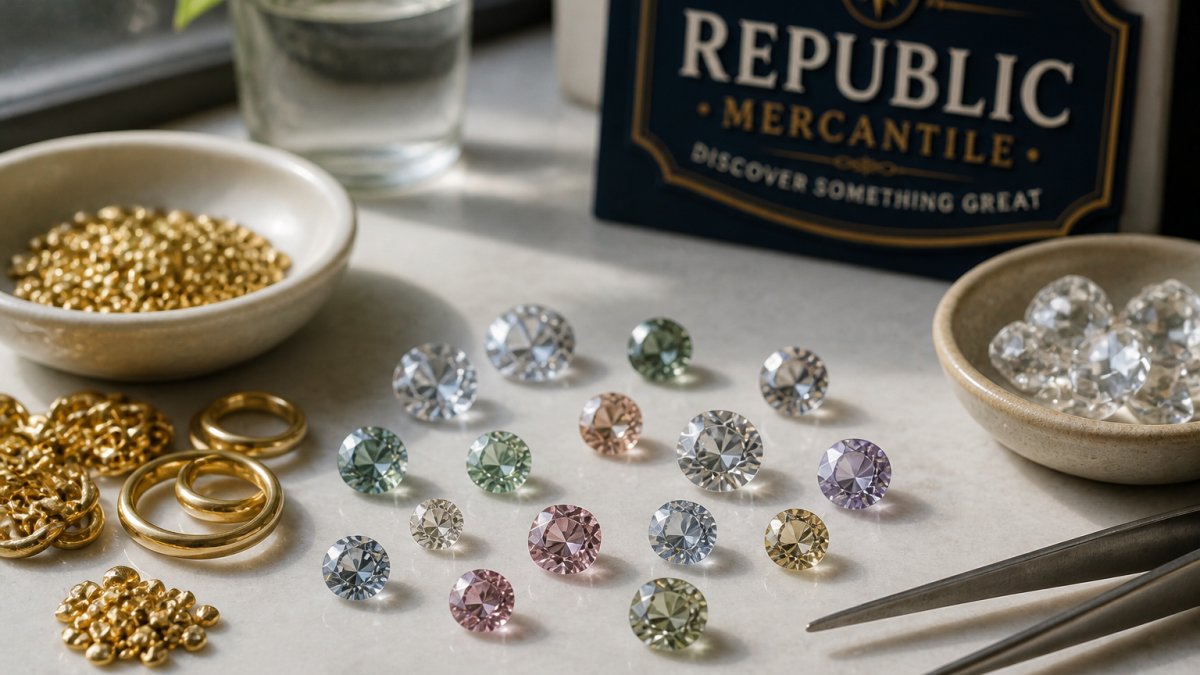
Gold: Recycled, Fairmined, and the Verification Gap
Gold is the highest-value material in most jewelry and the hardest to trace.
Recycled gold is recovered from old jewelry, industrial scrap, and e-waste.
Fairmined gold comes from artisanal and small-scale operations certified against environmental, labor, and community-development standards.
What to ask: Which refiner processed the gold, and does the refiner publish a chain-of-custody or recycled-content statement?
Silver: The Overlooked Material
Silver is often an afterthought, but it's mined at far greater volume than gold and carries its own risks, including mercury and cyanide use in some extraction methods and significant refining energy demand.
Recycled silver is widely available because silver is heavily used in electronics and photography, giving refiners a large scrap stream, making it one of the more accessible ethical choices.
For buyers, silver is often where the recycled-versus-mined distinction is easiest and cheapest to act on.
Diamonds: Kimberley Process, Provenance, and What Each Verifies
The Kimberley Process Certification Scheme is the baseline, designed to keep rough diamonds from funding rebel movements.
Stronger provenance tools exist: some producers issue mine-to-market documentation, and a few retailers publish the specific mine or region per stone.
What to ask: For a mined diamond, request the Kimberley Process certificate and, if the seller claims more, ask which mine or region and what documentation supports it.
Colored Gemstones: The Least Traceable Category
Colored gemstones, sapphires, rubies, emeralds, tanzanite, and others, are the hardest category to verify.
Responsible options typically rely on direct-trade relationships where the jeweler knows the cutter and, ideally, the mining community, relationship-based verification rather than certification-based, and harder for a consumer to audit.
What to ask: Who cut the stone, and can the seller describe the supply path from mine to setting?
Pearls: Farming, Not Mining
Pearls are cultivated rather than mined, removing the extraction problem but introducing water-quality, habitat, and labor considerations at farms. Freshwater and saltwater farming varies widely in environmental practice, and no single global certification covers farm and processing labor.
There is no equivalent of the Kimberley Process for pearls. Buyers generally rely on farm-level relationships and brand disclosure.
Lab-Grown Alternatives: Moissanite and Lab Diamonds
Lab-grown stones eliminate mining, removing extraction-related labor and land impacts. They don't eliminate energy use or labor questions at cutting and setting facilities.
1CT White Moissanite Round 6.5mm VVS1 Loose Gemstone GRA Card & Case Certified →
Moissanite is lab-created silicon carbide and offers high brilliance and durability at a low price point. Republic Mercantile carries certified moissanite options, including 1CT White Moissanite Round 6.5mm VVS1 Loose Gemstone at $24.99 and 1CT Pink Moissanite Round 6.5mm VVS1 at $34.99, that provide certified quality without mining impact.

A Quick Material Comparison
| Material | Primary ethical risk | Strongest verification tool | Main limitation |
|---|---|---|---|
| Gold | Mining labor, mercury use, refiner opacity | Fairmined certification; refiner chain-of-custody | Fairmined supply is limited; recycled claims don't cover labor |
| Silver | Extraction chemicals, refining energy | Recycled-content documentation | Recycled content verifies feedstock, not labor |
| Diamonds | Conflict funding, mine labor | Kimberley Process certificate; mine-to-market docs | KP doesn't cover labor or environment |
| Colored gemstones | Artisanal mining conditions, cutting labor | Direct-trade relationships; lab origin reports | Origin reports confirm place, not ethics |
| Pearls | Farm water quality, processing labor | Farm-level disclosure | No global certification exists |
| Lab-grown | Energy use, cutting/setting labor | Facility energy disclosure | No mining, but not impact-free |
How to Buy Ethical Jewelry
Buying ethical jewelry is a verification exercise, not a trust exercise: move from a brand's claim to a document you can inspect. Below is a checklist for chain-of-custody documentation, certification scope, recycled-content claims, and supplier disclosures, plus lifecycle decisions that often matter more than the purchase itself.
A Verification Checklist for Any Claim
Work through these in order. If a seller cannot answer an earlier item, later items are unlikely to hold up.
- Name the refiner or grower. For metal, which refiner processed it? For lab-grown stones, which facility grew it? A specific name is verifiable; "our supplier" is not.
- Name the mine, region, or farm. For mined stones and pearls, can the seller identify the source beyond a country? Country-level origin is the weakest form of provenance.
- Produce the certificate, not just cite it. Ask for the certificate number and the issuing body. Kimberley Process certificates, Fairmined certificates, and gemological lab reports each have identifiable issuers and reference numbers.
- Check the certification's scope. A certificate covers what it covers and nothing more. Kimberley Process addresses conflict funding, not labor or environment. A gemological lab report confirms identity and often origin, not working conditions. Fairmined covers specific artisanal and small-scale operations, not all gold.
- Ask about recycled content specifically. "Recycled" should come with a percentage or a refiner statement. A piece described as recycled with no figure is a marketing claim.
- Request supplier disclosures. Which cutting facility? Which setting workshop? Which plating or finishing operation? Reputable sellers can name at least the tier-one suppliers.
- Look for audit coverage, not just audit existence. Ask when the last audit was, who conducted it, and whether the report is available. A one-time audit verifies a moment, not a continuous practice.
Questions That Expose Weak Claims
When evaluating a piece, request specific answers:
- Where did the raw materials originate, and can you name the mine, farm, or grower?
- Who refined or cut the materials, and under what labor standards?
- What certifications apply, and what is each one's scope?
- Can you provide the certificate numbers and issuing bodies?
- What percentage of the piece is recycled content, and who verified it?
- Are independent audit reports available for review?
- What happens to this piece at end of life, can it be repaired, resold, or recycled through you?
Reputable sellers welcome these questions and provide detailed answers. Evasiveness, or a pivot to brand storytelling, is a red flag.
Repair, Resale, and End-of-Life: The Lifecycle Lever
The most ethical piece is often the one you keep wearing.
Repair. A broken clasp, loose stone, or worn band can almost always be fixed by a skilled jeweler.
Resale. Pre-owned jewelry retains value, and buying vintage or secondhand avoids all new mining and most new manufacturing emissions.
Recycling. Precious metals can be recovered and refined again at end of life.
Heirloom use. Passing a piece down is the highest-value lifecycle outcome.
Affordable Ethical Jewelry Options
Cost shouldn't force a choice between values and budget. Several strategies make ethical jewelry accessible:
Lab-grown alternatives like moissanite provide certified quality at dramatically lower prices than mined diamonds. Republic Mercantile's 1CT Garnet Moissanite Round 6.5mm VVS1 at $29.99 and 1CT Yellow Moissanite Round 6.5mm VVS1 at $29.99 demonstrate how certified gemstones can fit modest budgets.


Buying loose gemstones rather than finished pieces cuts costs by eliminating setting-labor markup. You can commission custom settings later or use the stones for collecting and display.
Secondhand and vintage jewelry extends ethical options further, avoiding all mining impact and manufacturing emissions while supporting circular economy principles.
The Trade-Offs and Limitations of Ethical Alternatives
No option is perfect. Understanding the limitations helps you make realistic choices.
Lab-grown diamonds, while environmentally superior to mining, still require significant energy.
Recycled metals face availability constraints.
Certifications have limitations. Fairmined standards are rigorous but cover only a fraction of global production.
Responsibly sourced gemstones typically cost more than conventional alternatives. The premium reflects genuine cost differences but can make ethical options inaccessible for budget-conscious buyers.
Repair, Resale, and the Circular Economy
The most ethical jewelry is jewelry that lasts.
Resale extends life further. Vintage and secondhand jewelry markets thrive because used pieces retain value.
The circular economy treats jewelry as a durable asset rather than disposable fashion.
Ethical jewelry isn't a luxury, it's a choice to align your purchases with your values.
Republic Mercantile makes it easy to explore ethical options. Our certified moissanite collection provides lab-grown gemstones with GRA certification, transparent sourcing, and fast shipping.
Frequently Asked Questions
What is ethical jewelry?
Ethical jewelry is made with responsibly sourced materials, fair labor practices, and transparency throughout the supply chain. It prioritizes minimizing environmental harm, ensuring safe working conditions for miners and artisans, and supporting fair wages in mining communities. Ethical pieces often use recycled metals, lab-grown diamonds, or gemstones from certified conflict-free sources with verified chain of custody documentation.
Can ethical jewelry be affordable?
Yes. Lab-grown diamonds and moissanite offer beauty and durability at a fraction of mined alternatives. Recycled gold jewelry eliminates mining costs while maintaining quality. Retailers focusing on ethical production and direct sourcing can offer competitive pricing. For example, moissanite loose gemstones start at $24.99, making them an accessible option for budget-conscious shoppers seeking sustainable alternatives without sacrificing quality.
How do I verify that jewelry is actually ethically sourced?
Look for third-party certifications from independent auditors, GRA cards for gemstones, and detailed provenance documentation. Ask retailers specific questions: Where was the metal mined? Which certifications does the piece hold? Can they trace the supply chain? Reputable sellers provide chain of custody records and supplier standards. Avoid vague claims like 'responsibly sourced' without supporting documentation or certification.
Is recycled gold more ethical than newly mined gold?
Recycled gold eliminates the environmental and human rights impacts of new mining, including habitat destruction, water pollution, and labor concerns in mining communities. It requires less energy to refine than newly mined gold. However, recycled gold's ethics depend on the source: ensure it comes from verified recycling programs with documented chain of custody. Both recycled and responsibly mined gold can be ethical choices when certified and transparently sourced.