

Table of Contents
- What Makes Home Decor Truly Sustainable?
- How to Identify Sustainable Furniture Materials
- Spotting Greenwashing in Home Goods
- Affordable Sustainable Home Decor That Doesn't Cut Corners
- Eco-Friendly Interior Design Tips for Every Room
- End-of-Life Disposal and Circular Economy
- Conclusion
- Frequently Asked Questions
Last Updated: September 16, 2026
What Makes Home Decor Truly Sustainable?
Sustainable home decor is furniture and accessories designed to minimize environmental harm across their entire lifecycle, from raw material extraction through manufacturing, shipping, use, and eventual disposal.
Three factors determine whether a piece earns the label: where its materials come from, how long it lasts, and what happens to it when you're done with it. Most shoppers focus only on the first.
That's backward. A chair made from organic cotton wrapped around a particleboard frame that sags in two years isn't sustainable, no matter what the hang tag says.
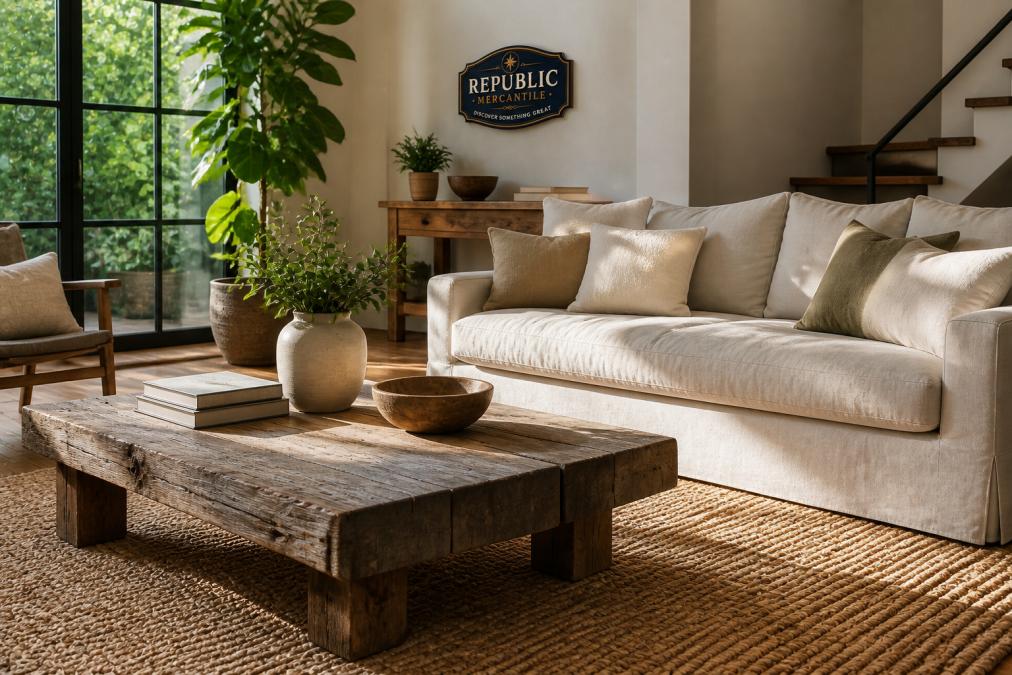
Certifications That Actually Mean Something
A certification is only useful if it is third-party audited, scoped to a specific claim, and traceable to a certificate number you can look up. Anything else is a logo.
GOTS (Global Organic Textile Standard) verifies that a textile contains at least 70% certified organic fibers and meets processing standards covering dyes, wastewater treatment, and labor conditions. The 70% threshold matters: a fabric can carry GOTS and still contain up to 30% conventional fiber, so check whether the item is labeled "organic" (95%+) or "made with organic" (70%+).
FSC (Forest Stewardship Council) confirms wood and paper products come from responsibly managed forests with chain-of-custody tracking from harvest to shelf. FSC 100% means all fiber is certified; FSC Mix allows a blend of certified, recycled, and controlled wood. Both are legitimate, but they are not the same claim.
GREENGUARD Gold certifies that a finished product meets strict limits on volatile organic compound emissions for use in schools and healthcare environments, the most relevant label for indoor air quality in furniture and mattresses.
Cradle to Cradle Certified goes further than most by scoring a product across material health, material reuse, renewable energy, water stewardship, and social fairness. It is the closest thing the industry has to a full-lifecycle scorecard, and it is harder to earn than a single-attribute label.
Fair Trade Certified and Fairtrade International address labor and pricing in supply chains rather than materials. They matter most for textiles, rugs, and small-batch artisan goods where handwork is common.
B Corp Certification evaluates the company, not the product, governance, worker treatment, community impact, and environment. A B Corp can still sell a disposable item; the label tells you the business operates responsibly, not that the sofa is recyclable.
Two practical verification habits separate informed buyers from everyone else. First, look up the certificate number on the issuing body's public database, counterfeit and expired claims exist, and a real certificate is searchable in seconds. Second, check the scope: a GOTS certificate on the pillowcase does not cover the polyester fill inside it.
The Durability Test: Why Longevity Beats Labels
A common mistake is treating sustainability as a materials question when it's really a math problem. A $40 particleboard side table replaced every 18 months costs more and generates more waste than a solid wood piece that lasts 15 years.
Ask three questions before buying: Does the joinery use real wood joints or staples? Can the frame be repaired? Are replacement parts available?
How to Identify Sustainable Furniture Materials
The fastest way to evaluate sustainable furniture materials is to flip the piece over and read the material list. Vague entries like "wood composite" or "performance fabric" without a fiber breakdown are a red flag.
Natural Fibers and Organic Textiles
Look for linen, hemp, wool, jute, and GOTS-certified organic cotton. These fibers biodegrade at end of life and require less processing than synthetics. Hemp in particular grows with minimal water and pesticide input.
EPA guidance on volatile organic compounds in indoor environments
Recycled Metal, Glass, and Reclaimed Wood
Recycled metal and recycled glass carry a fraction of the embodied energy of virgin materials. Reclaimed wood salvaged from barns, warehouses, and old buildings keeps usable timber out of landfills while giving you material with genuine character no factory finish can replicate.
Spotting Greenwashing in Home Goods
Greenwashing is the practice of making misleading environmental claims that a product or company cannot substantiate. It's rampant in home goods because the category has no single legal definition of "sustainable."
Four patterns to watch for:
- Vague language: "natural," "green," and "eco-conscious" mean nothing without a certification behind them
- Hidden trade-offs: a bamboo utensil set shipped from overseas in plastic wrap isn't low-impact
- Irrelevant claims: "CFC-free" on a product that never contained CFCs
- No proof: if the brand won't publish its supply chain, assume the worst
Affordable Sustainable Home Decor That Doesn't Cut Corners
Budget-friendly sustainable decor exists, but it rarely looks like what the influencer posts suggest. The practical path runs through fewer, better pieces and smart sourcing rather than expensive boutique labels.
Here's where affordability and sustainability actually overlap:
| Approach | Typical Cost | Environmental Impact | Best For |
|---|---|---|---|
| Second-hand and vintage finds | Lowest | Avoids new production entirely | One-of-a-kind statement pieces |
| Reclaimed wood and recycled metal | Moderate | Diverts waste from landfills | Shelving, tables, frames |
| GOTS-certified textiles | Moderate | Lower water and chemical use | Bedding, curtains, upholstery |
| FSC-certified solid wood | Higher upfront | Lasts decades, repairable | Core furniture pieces |
Where to Actually Source Affordable Pieces
The channels matter as much as the category. Estate sales and moving sales are the single best source of pre-flat-pack solid wood furniture, because the pieces were built before particleboard became standard. Local marketplace apps and free-cycle groups move usable furniture quickly, including damaged items that a hobbyist will repair. Habitat for Humanity ReStores sell donated building materials, furniture, and fixtures at a fraction of retail, and proceeds fund local housing.
The Cost-Per-Year Reframe
Affordability is not the same as low sticker price. A $40 particleboard side table replaced every 18 months costs roughly $27 per year and sends three tables to the landfill per decade. A $300 solid wood table that lasts 15 years costs $20 per year and ends its life as a donation or a refinishing project. The cheaper piece is the more expensive one once you divide by years of service.
What to Skip at Any Price
Some "budget sustainable" products are not worth buying at any discount. Anything with a vague fiber content ("wood composite," "performance blend") cannot be verified or repaired. Single-use decor, seasonal plastic garlands, printed paper banners, novelty items designed for one party, has no second life. And heavily discounted fast-furniture pieces are usually discounted because they are being cleared, not because they are a value; the replacement cycle is built into the business model.
Eco-Friendly Interior Design Tips for Every Room
Eco-friendly interior design tips work best when applied room by room rather than as one sweeping overhaul. Start with the spaces you use most and build from there.
Indoor Air Quality: The Room You Can't See
New furniture, paint, and pressed-wood products release formaldehyde and other VOCs into your home for weeks. This is the sustainability issue most guides skip entirely, and it affects your health directly.
EPA indoor air quality resources
End-of-Life Disposal and Circular Economy
The circular economy is a system where materials cycle back into production instead of ending up in a landfill. In home decor, that means planning for a piece's second and third life before you buy it.
- Donate usable furniture to local charities and shelters
- List worn pieces on marketplace apps for free pickup, even damaged items find takers
- Separate metal frames and hardware for scrap recycling
- Compost untreated natural fiber textiles like cotton, wool, and jute
EPA information on reducing and reusing materials
Conclusion
Building a home that reflects real sustainability takes patience and a willingness to look past the label. The good news is that the most affordable sustainable home decor is often the most genuinely sustainable: second-hand finds, solid wood pieces that last, and textiles you can trace back to a certified source.
Frequently Asked Questions
What are the most common eco-friendly materials used in home decor?
Natural fibers like organic cotton, linen, wool, and jute are common because they come from renewable resources and break down at the end of their life. Recycled metal and recycled glass show up in lighting, frames, and tabletop pieces. FSC-certified wood and reclaimed wood are standard for furniture. Look for GOTS-certified textiles and VOC-free finishes to avoid harmful chemicals in your home.
How can I identify greenwashing when shopping for home goods?
Watch for vague terms like 'natural' or 'earth-friendly' with no certification behind them. Check whether a brand publishes supply chain transparency details, specific material sourcing, or third-party certifications like GOTS or FSC. If a product claims to be sustainable but ships from overseas with no information about shipping emissions or packaging, that is a red flag. Ask what happens to the item at end of life.
Are sustainable home decor brands more expensive than traditional options?
Not always. Affordable sustainable home decor exists, especially in second-hand, vintage, and upcycled categories. Durable goods often cost more upfront but last longer, which lowers the cost per year of use. Budget-conscious shoppers can prioritize pieces that serve multiple purposes and check rotating inventory for deals on quality items.
How do fair trade practices impact the quality of home decor?
Fair trade and ethical manufacturing often correlate with better craftsmanship because artisans and workers are paid fairly and have time to do quality work. Handcrafted and artisan-made pieces tend to have tighter construction and better materials than mass-produced alternatives. Supply chain transparency from a fair trade brand usually means you can trace where materials came from and how the item was made.
Sustainable home decor doesn't require a renovation budget or a certification degree. It requires asking better questions before you buy: where did this come from, how long will it last, and where does it go when I'm done. Republic Mercantile makes that easier with fast shipping, regularly updated inventory, and one-stop shopping for everything from home goods to kitchen essentials. Shop now and find pieces built to stay.