

Last Updated: October 28, 2026
Quick Summary
Seasonal clothing sales are worth waiting for when you buy off-season, since retailers mark down one season's stock to make room for the next. Winter coats often drop as spring arrives, while swimwear and sandals go on sale late in summer.
- Winter items like parkas and cardigans typically go on sale late January to February.
- Swimwear and sandals often drop in price late June to July.
- Set a price ceiling for each item and buy only when it hits that number.
- Stack discounts in order: promo code first, then loyalty points, then cashback portal.
- Check return shipping costs and restocking fees before buying clearance items.
Table of Contents
- Why Seasonal Clothing Sales Matter for Budget Shoppers
- The Best Time of Year to Buy Clothes, Season by Season
- Holiday Sales vs. End-of-Season Clearance: Which Saves More
- Seasonal Clearance Sale Strategies That Actually Work
- How to Shop for Clothes on a Budget Without Sacrificing Quality
- Top Seasonal Finds to Buy at Republic Mercantile
- Planning Your Next Seasonal Purchase at Republic Mercantile
- Frequently Asked Questions
Why Seasonal Clothing Sales Matter for Budget Shoppers
Seasonal clothing sales can cut your wardrobe spending significantly, but only if you know when retailers mark prices down and how to act on it. Most budget shoppers buy at full price because they need an item now, and that habit costs them the most.
Waiting for a sale is not always the right call. Some items sell out fast, and some markdowns are shallow. The goal is to know which pieces to hold out for and which to buy right away.
Many budget shoppers find that the best deals cluster around a few predictable windows. Knowing those windows turns a random hunt into a planned purchase.
The Best Time of Year to Buy Clothes, Season by Season
Retailers typically clear out one season to make room for the next, so the timing of markdowns follows the calendar. Winter coats tend to drop in price as spring arrives, while swimwear and sandals often go on sale late in summer. Shopping against the season is the core of this strategy.
Here is a simple way to think about it:
| Season to Buy | Typical Markdown Window | Items Worth Waiting For |
|---|---|---|
| Winter | Late January to February | Parkas, cardigans, sweatshirts |
| Spring | Late March to April | Lightweight tops, dresses |
| Summer | Late June to July | Swim trunks, sandals, tank tops |
| Fall | Late August to September | Long-sleeve blouses, knit layers |
Treat the table as a starting point, since clearance timing varies by retailer and inventory.
Holiday Sales vs. End-of-Season Clearance: Which Saves More
Holiday sales and end-of-season clearance both cut prices, but they reward different shoppers. Holiday events bring deep, short-lived discounts that favor people who already know what they want. End-of-season clearance runs longer and usually reaches deeper on the remaining stock.
Here is how the two compare:
Watch out: a holiday discount on a full-price item is not always a real saving, so compare the sale price against prior prices before you buy.
Seasonal Clearance Sale Strategies That Actually Work
Clearance works best when you have a list. Write down the three to five pieces you need for the next season, note the size and price you would pay, and check those items weekly. This keeps you from buying impulsively because a sale looks good.
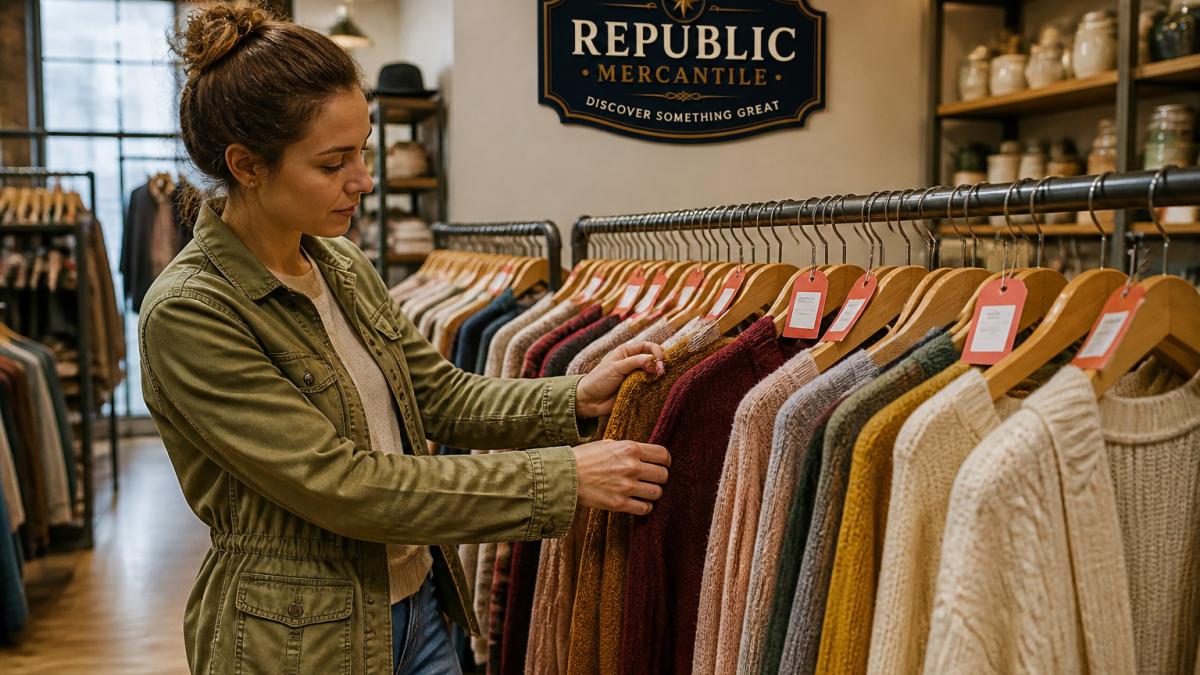
Set a price ceiling for each item before you shop. If a cardigan normally costs more than you want to spend, wait until it hits your number. Many shoppers also sign up for store alerts so they hear about markdowns as they happen.
Use Price-Tracking Tools Instead of Guessing
- Browser extensions: Price-tracking extensions like Honey, CamelCamelCamel (for Amazon), and Capital One Shopping let you set a target price and get an alert when an item drops. Add the item to your watch list, set your ceiling, and let the tool do the weekly checking.
- Retailer wish lists: Most major retailers (Target, Old Navy, Nordstrom, Walmart) let you save items to a wish list and will email you when a saved item goes on sale. This is free and catches markdowns that never appear in a circular.
- Google Shopping price history: Search the item on Google Shopping and click the "price history" graph to see whether the current "sale" price is actually lower than the last 90 days. A common trap is a "40% off" tag on an item that was marked up two weeks earlier.
Stack Discounts in the Right Order
Stacking is where budget shoppers leave money on the table. The order matters:
48 pc Manifested Reseller's Wholesale Box - New Long Sleeve Blouses Tops Shirts →
- Start with a promo code or coupon applied to the cart subtotal.
- Then apply loyalty points or store rewards, most programs let you redeem points on top of a promo code, but not the reverse.
- Use a cashback portal last (Rakuten, Fetch, or your card's shopping portal) so the cashback is calculated on the final discounted total.
- Check whether your credit card has a rotating category (many cards offer 5% back on department stores in a specific quarter), activate it before checkout.
A common pattern is that shoppers apply a coupon and stop, missing the loyalty redemption and the card category that would have stacked on top.
Avoid the Impulse-Buy Trap
Sale events are engineered to compress your decision time. Two tactics blunt that:
- The 24-hour rule: Add the item to your cart, close the tab, and wait a day. If you still want it at your ceiling price, buy it. Most clearance runs 2-4 weeks, so a one-day pause rarely costs you the item, and it filters out purchases you would have regretted.
- The cost-per-wear check: Divide the sale price by the number of times you realistically expect to wear the piece in the next 12 months. A $15 top you wear twice costs $7.50 per wear; a $40 top you wear 20 times costs $2 per wear. The higher-priced item is often the better budget buy.
How to Shop for Clothes on a Budget Without Sacrificing Quality
Before you buy online, check the return policy. A clearance item that does not fit can cost more to fix than it saved if returns are difficult. Review the return window and whether the retailer covers return shipping.
The Hidden Cost of Returns on Clearance
Most sale guides list where to shop and stop. They rarely mention that the "saving" on a clearance item can evaporate the moment you need to return it. A few patterns are worth knowing before you check out:
- Restocking fees: Some retailers charge a restocking fee (commonly 10-15% of the item price) on returns of certain categories, and clearance items are sometimes excluded from free returns entirely. Read the fine print on the product page, not just the general returns page.
- Return shipping: If the retailer does not cover return shipping, a $30 clearance item can cost $7-$10 to send back, wiping out most of the discount. Many retailers now charge for mail returns unless you use a store drop-off.
- Final-sale flags: Clearance and outlet items are frequently marked "final sale," meaning no returns at all. If the size chart is ambiguous, that is a real risk.
- Refund timing: Refunds to a credit card can take 5-10 business days to post. If you are shopping on a tight budget, a slow refund can tie up cash you need for the next purchase.
Check Fabric and Construction Like a Reseller
Resellers who buy wholesale lots, the same approach behind bulk clothing boxes, use a quick inspection routine you can copy:
- Fabric content: Natural fibers (cotton, wool, linen) generally hold up better than high-polyester blends, though blends can be durable if tightly woven. Check the percentage, not just the fiber name.
- Seam finishing: Turn the item inside out. Serged (overlocked) seams are standard; flat-felled or French seams signal better construction. Loose, single-stitched seams are a wear risk.
- Weight and drape: A heavier knit resists pilling; a thin knit stretches out at the elbows and knees. Hold the item up to light, if you can see through it easily, expect it to wear quickly.
- Hardware and closures: Zippers, buttons, and snaps are the first failure points. Metal zippers outlast plastic; reinforced buttonholes outlast raw ones.
The Slow-Fashion Budget Angle
The cheapest wardrobe is not the one with the lowest sticker price, it is the one you replace least often. A $60 wool sweater bought on end-of-season clearance and worn 60 times costs $1 per wear; a $15 fast-fashion sweater worn five times before it pills costs $3 per wear. Buying fewer, better pieces on deep markdown is the core of budget slow fashion, and it is a strategy most sale listicles ignore.
Fit and Sizing Before You Commit
Read the size chart and compare it with your own measurements, not the size you usually wear. Fabric weight and stretch also affect fit, so a knit that looks roomy on the screen may run small in person.
Keep the return steps in mind before you check out. Save the order confirmation, note the return deadline, and keep tags attached until you know the item fits and holds up.
Top Seasonal Finds to Buy at Republic Mercantile
Our top pick for a warm-weather basic is the Women's Slip-On Sandal Flip-Flops in US size 8 at $6.95. For cooler days, the Gildan Black Crewneck Sweatshirt in size M is $9.99, and the Rosvigor Women's Snap Button Parka in size L is $19.95.

For buyers who resell or stock up, our 50-piece Manifested Reseller Wholesale Box of new women's dresses is $475.00 and the 48-piece long-sleeve blouse box is $288.00. The Ecetana Women Slippers in size 7/8 are $8.95.


Planning Your Next Seasonal Purchase at Republic Mercantile
Republic Mercantile adds new items regularly, so check back before each season to see what has arrived. Keep your size and price notes handy, and shop now at Republic Mercantile.
Frequently Asked Questions
What month are the best clothing sales?
Late January through February tends to bring deep markdowns on winter coats, sweaters and boots as stores clear out cold-weather stock. Late June through July is the strongest window for summer clothing, while late December into early January picks up holiday-season leftovers. Timing depends on the item: buy winter outerwear near the end of the season and summer swimwear near its close, when retailers need to free up shelf space for the next collection.
Is it better to buy clothes at the start or end of a season?
For budget shoppers, the end of a season is almost always cheaper, since unsold inventory gets marked down to make room for new arrivals. The tradeoff is size and color selection, which thins out as the season closes. If a specific size or style matters to you, buy early at full price or check clearance sections regularly. Otherwise, waiting for markdowns on wardrobe staples like jeans, sweatshirts and outerwear usually pays off.
How do holiday sales compare to end-of-season clearance events?
Holiday sales such as Black Friday and after-Christmas events offer strong discounts across many categories, but they often focus on gifts and electronics. End-of-season clearance tends to deliver deeper percentage cuts on apparel specifically, especially for items that have sat unsold for several weeks. Use holiday sales for gift shopping and seasonal basics you need immediately, and wait for clearance on pieces you can store until next season.
How can budget shoppers maximize savings during end-of-season sales?
Set a budget before you browse, and build a short list of wardrobe staples you actually need. Check wholesale lot merchandise at Republic Mercantile, such as the 48-piece Manifested Reseller's Wholesale Box priced at $288.00 or the 50-piece women's dress box at $475.00.
